what does it mean to rip a cd as a journey through time and technology brings us face to face with the quiet hum of an optical drive translating physical music into lasting digital memories. Beneath the spinning silver surface lies a delicate dance of lasers reading microscopic pits and lands, transforming solid plastic into timeless soundscapes that live safely on modern hard drives.
As streaming services constantly shift and ephemeral cloud libraries leave listeners longing for true ownership, the deliberate act of extracting audio files offers a profound sense of psychological security and deep connection to music. Navigating the intricate layers of legal frameworks, acoustic fidelity, and ergonomic workstations reveals an art form where engineering precision meets pure auditory passion, empowering enthusiasts to reclaim full control over their personal sound libraries.
Unraveling the fundamental mechanics behind transforming physical polycarbonate discs into digital audio files residing safely on a computer hard drive
Every time a silver disc spins within a computer tray, an intricate microscopic journey begins, bridging the physical and digital realms of sound preservation. Transforming a tangible, light-reflecting object into a pristine sequence of binary code requires precision engineering and an understanding of the optical physics embedded within the polycarbonate layers. This profound technical transition secures fleeting acoustic moments against the inevitable decay of time.
Optical data extraction is a delicate choreography of light, reflection, and high-speed rotation operating beneath the surface of the media. As the optical drive initializes, a coherent laser beam pierces the clear polycarbonate substrate, focusing meticulously upon the internal reflective aluminum layer. The core of this extraction mechanism relies on the physical topography of the disc, which is stamped not with visible grooves, but with a microscopic spiral track of flat areas and microscopic depressions.
Laser reading mechanics of pits and lands
The translation of physical topography into digital streams relies entirely on the wave interference properties of reflected coherent light. The reflective surface features elevated regions known as lands and recessed depressions known as pits, engineered precisely to one-quarter of the laser beam’s wavelength. When the focused laser strikes a flat land, the light bounces directly back into the optical pickup unit’s photodetector, registering as a constructive interference peak representing a binary state.
Conversely, when the beam transitions between a pit and a land, the path length difference causes destructive interference, scattering the light waves and dropping the photodetector voltage to register the alternate binary state.
The precision of this optical reading process depends on the exact quarter-wavelength depth of the pits, turning microscopic physical topography into a flawless stream of binary ones and zeros.
This continuous fluctuation of light intensity is instantaneously converted into electrical impulses, mapping the exact digital reconstruction of the original acoustic waveform onto the host computer hard drive.
Historical evolution of optical data extraction
The journey of capturing audio from compact discs has transformed dramatically alongside computing architecture over the past four decades. In the nascent era of digital audio during the late nineteen-eighties and early nineties, extraction was a primitive, analog-adjacent process hampered by primitive sound cards and unreliable bus architectures. Early systems relied on real-time analog ripping, routing audio signals through standard headphone jacks directly into internal sound card line-ins, which introduced signal degradation, jitter, and timing errors.
As computing power expanded and CD-ROM drives became standard peripherals, software developers unlocked direct digital extraction capabilities, though data transfer speeds remained painfully slow and prone to synchronization failures. The modern landscape utilizes advanced high-speed optical drives paired with sophisticated extraction protocols that verify bitstream integrity against online acoustic databases, ensuring that every single file residing on a solid-state drive is an exact, mathematically verified clone of the original studio master.
Comparative analysis of audio format longevity and data recovery
Evaluating the resilience of various physical audio formats requires analyzing how environmental degradation impacts data recovery over extended periods. The following responsive table Artikels the distinct structural characteristics and recovery thresholds of compact discs, magnetic cassette tapes, and vinyl grooves.
| Storage Format | Primary Recovery Mechanism | Common Vulnerability | Estimated Archival Lifespan |
|---|---|---|---|
| Audio Compact Disc | Optical laser reflection and digital error correction | Polycarbonate scratches and aluminum layer oxidation | 30 to 100+ years under optimal climate control |
| Magnetic Cassette Tape | Electromagnetic induction via read/write tape head | Magnetic flux degradation and tape stretching | 10 to 30 years depending on storage conditions |
| Vinyl Grooves | Physical stylus tracking and mechanical resonance | Groove wall abrasion and particulate accumulation | 50 to 100+ years with proper stylus maintenance |
Error correction algorithms in digital audio conversion
Imperfections on physical media, such as microscopic dust particles, surface scratches, or manufacturing blemishes, inevitably disrupt the continuous stream of laser reflections during the ripping session. To counteract these physical liabilities, robust mathematical error correction algorithms are deeply integrated into the extraction pipeline to reconstruct missing or corrupted audio sectors seamlessly. When the optical drive encounters an unreadable data block due to a surface obstruction, it does not instantly halt the ripping session or output catastrophic digital static into the resulting file.
Instead, the system employs advanced cross-interleaved Reed-Solomon coding, which spreads the audio data across multiple sectors on the disc during manufacturing, allowing the hardware and software to mathematically reconstruct missing fragments using surrounding redundant data. If the physical damage exceeds the predictive capacity of the error correction code, the extraction software applies sophisticated interpolation techniques to bridge the audio gap smoothly, ensuring the listener experiences uninterrupted sonic fidelity without ever noticing the underlying physical flaw.
Investigating the profound psychological comfort experienced by music enthusiasts who reclaim physical ownership of their favorite albums through personal extraction software

Source: datahoards.com
Extracting raw digital audio tracks from a physical disc mirrors how modern corporate learning and development programs extract valuable knowledge from experienced teams, transforming legacy assets into accessible formats that empower organizations to unlock timeless insights and continuously revitalize their core digital archives.
The quiet hum of a desktop tower spinning a silver polycarbonate disc initiates a profound ritual of reclamation in modern living spaces. As extraction software translates microscopic pits and lands into pristine digital code, listeners often experience an immediate wave of psychological relief. This deliberate act of self-reliance transforms passive consumers into sovereign curators of their own auditory environments. By bypassing the shifting sands of corporate subscription models, individuals forge an unbreakable psychological bond with their musical heritage, finding deep solace in the tangible roots of their personal collections.
In an era dominated by rented melodies and invisible cloud servers, the human mind craves the grounding effect of tangible artifacts. Streaming platforms offer infinite choice yet breed a subtle, chronic anxiety rooted in ephemerality. Playlists vanish overnight due to licensing disputes, and favorite albums mysteriously disappear behind paywalls or regional restrictions. Building a localized digital archive through personal extraction software acts as an emotional anchor against this digital transience.
When listeners physically handle a compact disc, slide it into a tray, and convert the data onto a dedicated hard drive, they reassert control over their cultural consumption. This tactile engagement activates neurological pathways associated with safety, permanence, and authentic ownership, effectively silencing the low-grade worry of sudden loss.
Emotional reassurance derived from possessing local digital archives independent of unstable streaming servers
The emotional security of a locally stored music library manifests as a profound reduction in auditory anxiety. Real-life disruptions, such as the sudden catalog removal of classic albums from major streaming services due to corporate restructuring, often leave listeners feeling disenfranchised and vulnerable. Cases involving unexpected server outages during localized network failures further highlight the fragility of cloud-dependent listening habits.
Owning the raw FLAC or MP3 files on a home server provides a bulletproof guarantee of continuous access, completely independent of internet connectivity, corporate goodwill, or algorithmic whims. This absolute sovereignty fosters a tranquil listening state, where the mind rests easy knowing that cherished art remains permanently safeguarded within domestic boundaries.
Extracting raw digital audio data from a shiny physical disc transforms stagnant tracks into liberating files. Navigating this technical preservation mirrors the choices we face daily, much like understanding what is the difference between internal and external conflict when personal doubts clash with outer obstacles. Ultimately, ripping your favorite albums breathes new life into your cherished music library.
True peace of mind in the digital age begins the moment your favorite music lives on a hard drive you can physically touch and disconnect from the rest of the world.
Nostalgic sensation of gazing at digital album artwork while listening to freshly extracted tracks in a living room
Visual storytelling enhances auditory appreciation, anchoring distant memories in the warm illumination of a modern living space. As high-resolution digital scans of liner notes and cover art fill the computer display, the act of listening transcends mere background noise and becomes an immersive, multi-sensory journey. Soft amber light from a nearby floor lamp bounces off wooden bookshelves, while the intricate typography of a favorite 1990s alternative rock booklet scrolls gently across a high-definition monitor.
The room fills with crisp, uncompressed audio frequencies, creating a harmonious bridge between tactile nostalgia and modern digital convenience. This visual anchoring allows listeners to mentally step back in time, reliving the exact emotional resonance they felt when first unwrapping the physical CD decades ago.
Understanding how listener anxiety has transformed across different generations requires examining the structural shift from physical formats to decentralized cloud networks. The table below Artikels this evolution across four distinct decades of music consumption.
| Decade | Primary Format | Ownership Level | Listener Anxiety Index |
|---|---|---|---|
| 1990s | Compact Disc | Complete Physical | Minimal (Risk of physical scratch only) |
| 2000s | Compressed MP3 Files | Local Digital | Low (Risk of hard drive failure) |
| 2010s | Early Cloud Streaming | Rented Access | Moderate (Risk of catalog removal) |
| 2020s | Algorithmic Cloud Ecosystems | Transient License | High (Risk of subscription loss and curation shifts) |
Subconscious desire for permanence when individuals curate personal libraries away from corporate cloud ecosystems
Human psychology continually seeks monuments against the relentless march of time, and personal media curation serves as a modern manifestation of this timeless drive. Extracting compact discs into private digital vaults satisfies an innate urge to build an enduring legacy that outlasts corporate ecosystems. Historical precedents, such as the sudden obsolescence of early digital music storefronts leaving purchased tracks orphaned, taught consumers a harsh lesson about trusting centralized authorities with personal archives.
By migrating away from renting music on cloud platforms and instead establishing meticulously tagged, locally backed-up libraries, individuals construct a permanent monument to their personal identity. This meticulous organization of genres, artists, and meticulously scanned artwork provides a quiet sanctuary of permanence in an increasingly fluid and uncertain world.
Navigating the labyrinth of proprietary licensing agreements and legal frameworks surrounding the unauthorized duplication of commercially manufactured silver music disks
The glowing red laser of an optical drive slicing through microscopic pits on a polycarbonate surface represents more than a mere technical operation; it acts as a quiet crossing across invisible legal boundaries. Every time a silver disc spins inside a computer, a complex web of international intellectual property law, corporate licensing agreements, and statutory exceptions is quietly engaged. Audiophiles often assume that purchasing a physical album grants absolute ownership over the embedded audio data, yet the reality involves a delicate balance between consumer convenience and the strict statutory protections granted to recording artists, songwriters, and major record labels.
Stepping into the courtroom of modern copyright history reveals a landscape shaped by intense lobbying, rapid technological disruption, and shifting judicial interpretations. While the physical compact disc belongs entirely to the buyer, the intangible musical composition and the specific sound recording remain the exclusive property of their respective copyright holders. This dichotomy creates a fascinating friction point where everyday personal archiving practices collide with rigid legislative definitions, requiring listeners to understand the exact boundaries of what is legally permissible behind closed doors.
Jurisdictional nuances of personal backup exceptions for copyright-protected musical compositions
The legality of extracting audio data from a purchased compact disc depends heavily on geographical borders and local legislative frameworks, creating a fragmented global map of consumer rights. In the United States, for instance, the foundational Audio Home Recording Act of 1992 officially acknowledged a consumer’s private, noncommercial copying privilege for digital and analog musical recordings, yet subsequent legislation like the Digital Millennium Copyright Act introduced stringent limitations that complicate the process.
Meanwhile, European Union member states operate under the legal concept of private copying levies, where a small tax is added to blank media and recording hardware to legally compensate rights holders for home archiving, leading to vastly different legal realities for a listener in Berlin compared to one residing in Chicago.
These jurisdictional disparities mean that an action considered standard consumer behavior in one country might technically breach statutory provisions in another, even if the underlying technology remains identical. Navigating these regional differences requires recognizing that copyright law rarely moves at the same speed as consumer hardware innovation. When individuals extract audio tracks for personal utility, they rely on localized jurisprudence that either explicitly carves out private copying exemptions or remains cautiously silent, forcing courts to continually balance technological autonomy against commercial protection.
Distinction between shifting formats for private enjoyment and distributing duplicated tracks across peer-to-peer digital networks
A fundamental legal chasm separates the private act of moving music from a silver disc to a personal smartphone and the public dissemination of those same audio files across shared digital ecosystems. When a listener extracts tracks solely to enjoy their legally acquired music collection on modern, portable devices without optical drives, they are exercising personal format shifting within the sanctity of their own private domain.
Conversely, uploading those exact same extracted files to public file-sharing networks, cloud storage directories accessible by strangers, or social media platforms transforms private archiving into unauthorized public distribution, triggering severe statutory penalties under global copyright treaties.
The law views the former as a benign adaptation to changing playback technology, while the latter represents a direct financial displacement of the copyright holder’s exclusive right of public performance and reproduction. Copyright infringement charges almost invariably stem from the unauthorized dissemination phase rather than the initial private extraction, highlighting the critical legal barrier between solitary consumption and collective distribution.
Common misconceptions regarding fair use doctrines in relation to personal optical disk duplication
Popular culture frequently misinterprets foundational legal principles, applying broad assumptions to complex statutes that govern intellectual property and digital media extraction. Listeners often rely on generalized notions of fair use to justify extensive duplication and sharing practices, failing to recognize the rigorous four-factor judicial test required to establish a legitimate fair use defense in a court of law.
Extracting pristine digital tracks from physical silver discs breathes new life into your cherished music library, transforming tangible silver surfaces into limitless sonic journeys. As you capture every nuance, diving deeper into 16 vs 24 bit audio reveals breathtaking depths of clarity and modern acoustic precision. Ultimately, converting these timeless physical albums secures your precious audio legacy forever.
Understanding the exact boundaries of these legal doctrines helps clarify what actions are genuinely protected and which popular myths expose consumers to unintended liabilities. The following points address pervasive misunderstandings surrounding optical disk duplication:
- Ownership of the physical compact disc conveys absolute ownership of the underlying musical copyright, which is incorrect because purchasing the media only grants ownership of that single manufactured object, not the intellectual property encoded upon it.
- Any form of personal copying is automatically protected under the umbrella of fair use, whereas courts evaluate the purpose, character, amount used, and market effect of the duplication on a strict case-by-case basis.
- Extracting music for personal use remains completely legal regardless of how the audio files are subsequently stored, shared, or utilized in public spaces, ignoring the strict legal boundaries that govern format shifting versus public distribution.
- Bypassing copy-protection mechanisms is universally permitted as long as the user legitimately purchased the physical disc, failing to account for anti-circumvention prohibitions established by modern digital copyright legislation.
Regulatory history of digital rights management technologies designed specifically to prevent unauthorized audio extraction
The relationship between music consumers and content owners shifted dramatically at the turn of the twenty-first century with the commercial introduction of copy-protected compact discs, often marketed under proprietary labels like Copy Control. Major record labels deployed these technologies in a desperate attempt to curb the rising tide of digital piracy, deliberately embedding intentional errors, secondary data sessions, and proprietary software wrappers onto silver discs to render them unreadable by standard computer CD-ROM drives while still functioning in traditional home stereo equipment.
This era sparked intense consumer backlash, class-action lawsuits, and security scandals, most notably the infamous Sony BMF rootkit incident of 2005, where anti-piracy software installed covert rootkits on consumer computers, exposing millions of systems to severe malware vulnerabilities.
Technical protection measures do not redefine the legal boundaries of copyright; rather, they serve as digital fences that force a constant legal and engineering negotiation between corporate control and consumer rights.
The regulatory fallout from these aggressive technological measures forced legislative bodies and courts to reevaluate the legal status of anti-circumvention tools, ultimately establishing clear precedents regarding consumer privacy, digital security, and the limits of proprietary hardware restrictions. As the industry eventually abandoned physical copy-protection schemes in favor of digital storefronts and streaming models, the historical archive of protected discs left behind a lasting testament to the ongoing friction between hardware security and personal archiving freedoms.
Assessing the acoustical variations and mathematical discrepancies existing between lossy compression formats and uncompressed audio preservation methods.: What Does It Mean To Rip A Cd

Source: lifewire.com
When audio data travels from a physical polycarbonate disc into a digital storage medium, the path chosen dictates the exact fidelity of the sound waves delivered to the listener’s ear. Striking a delicate balance between storage conservation and auditory perfection requires an intimate understanding of how different encoding architectures handle raw waveform data. Engineers and purists continually evaluate these underlying mechanics to ensure that the emotional impact of a musical performance remains entirely uncompromised.
The debate between uncompressed preservation and lossy reduction fundamentally centers on data preservation versus aggressive curation. While casual listening environments often mask the subtle degradation inherent in heavily compressed files, dedicated audio systems expose every mathematical rounding error and missing harmonic overtone. Examining these technical discrepancies reveals the true cost of convenience in the modern digital landscape.
Sonic Fidelity Preservation Achieved by FLAC Codecs Versus Traditional MP3 Compression Algorithms
Evaluating the architectural differences between lossless and lossy codecs illuminates why certain files retain the pristine breath of a live performance while others exhibit noticeable digital artifacts. The following detailed comparison Artikels the distinct operational characteristics of FLAC and MP3 formats.
- FLAC operates on the principle of mathematical lossless compression, reducing file sizes by roughly 50 to 60 percent without discarding a single sample of the original PCM audio stream.
- MP3 utilizes perceptual lossy compression, permanently discarding audio data deemed outside the threshold of human hearing, which results in drastically smaller file sizes but irreversible sonic loss.
- Bitrate flexibility separates the two formats significantly, as FLAC maintains a variable bitrate reflecting the dynamic complexity of the music, whereas MP3 often relies on fixed or constrained bitrates that bottleneck complex orchestral passages.
- Harmonic preservation remains superior in FLAC encoding, accurately capturing high-frequency air, room reverberation, and instrument decay, while MP3 frequently introduces phase distortion and swishing artifacts known as coding noise in high-frequency spectrums.
Mathematical Psychoacoustic Principles Utilized by Audio Engineers to Discard Inaudible Frequencies During Lossy Encoding Sessions, What does it mean to rip a cd
Human auditory perception acts as the ultimate filter during lossy compression, guiding algorithms to selectively discard data that the brain would likely fail to register anyway. Audio engineers harness psychoacoustics to map out the exact limitations of human hearing before committing a lossy encode to memory.
Psychoacoustic models primarily rely on the phenomenon of simultaneous masking, a process where a louder sound completely obscures a quieter sound occurring at a neighboring frequency. By calculating these temporal and spectral masking thresholds dynamically across thousands of short-time Fourier transform windows, the encoder safely mutes data blocks without altering the perceived listening experience for the average ear. Furthermore, absolute thresholds of hearing establish a baseline boundary, ensuring that frequencies falling entirely outside the standard twenty hertz to twenty kilohertz human range are completely stripped away from the digital stream.
Perceptual coding exploits the biological limitations of human hearing by mathematically isolating and erasing auditory information that remains functionally masked by louder neighboring frequencies.
To visualize the implementation of these algorithms, picture a detailed graphical user interface displaying a multi-band spectral analysis of a transient drum hit. The software overlays a glowing, translucent threshold curve across the frequency spectrum, visually highlighting the exact bands where musical energy punches through the noise floor and the dormant regions where data is safely scheduled for permanent deletion.
Storage Requirements Versus Frequency Response Retention Across Various Audio Formats
Selecting the optimal digital container requires balancing the physical realities of storage capacity against the desire for uncompromised acoustic detail. The comparative metrics below illustrate how different codecs scale in file size and frequency retention.
| Audio Format | Compression Type | Average Bitrate | Frequency Response Retention | Storage per Album (Approx.) |
|---|---|---|---|---|
| WAV / AIFF | Uncompressed | 1411 kbps | Full spectrum (0Hz – 22.05kHz+) | 500 MB – 1 GB |
| FLAC / ALAC | Lossless | 700 – 900 kbps | Full spectrum (0Hz – 22.05kHz+) | 250 MB – 400 MB |
| MP3 (High Quality) | Lossy | 320 kbps | Truncated (Up to 20 kHz) | 80 MB – 100 MB |
| MP3 (Standard) | Lossy | 128 kbps | Heavily Filtered (Up to 16 kHz) | 30 MB – 40 обла MB |
Impact of Dynamic Range Compression on Classical Orchestral Recordings Versus Modern Electronic Dance Music Tracks
Dynamic range management interacts uniquely with different musical genres, fundamentally altering the emotional weight and spatial dimension of the final playback. Classical orchestral arrangements rely heavily on vast dynamic shifts, moving seamlessly from a gentle, solitary flute whisper to a thunderous, room-shaking brass and percussion crescendo.
Applying aggressive dynamic range compression to a classical piece crushes these delicate peaks and valleys, robbing the performance of its natural breathing room and dramatic tension. Conversely, modern electronic dance music engineered for club environments often utilizes intentional limiting and compression to maintain a consistently high loudness level, ensuring maximum impact over heavy basslines regardless of playback systems. Consequently, lossless preservation holds paramount importance for orchestral recordings to protect delicate spatial cues, whereas lossy compression can occasionally mask minor mix deficiencies in heavily compressed electronic tracks.
Extracting digital audio tracks from a physical compact disc transforms legacy silver platters into modern files, much like selecting the ideal wine match with turkey elevates a holiday feast into an unforgettable culinary masterpiece. This meticulous conversion process preserves timeless musical memories securely on hard drives, ensuring your favorite analog-era albums thrive forever in the crystal-clear digital landscape of today.
Designing an ergonomic computer workstation dedicated to processing massive physical music collections with maximum operational efficiency and speed.

Source: datahoards.com
Transforming a towering archive of legacy physical compact discs into a pristine digital library is a monumental archival undertaking that demands a meticulously engineered operational environment. When collectors embark on the journey of rescuing thousands of silver albums from physical obsolescence, the sheer physical repetition of handling, cleaning, and feeding fragile polycarbonate disks into computer optical drives can take a severe toll on the human body.
Establishing a specialized archival workstation is not merely a matter of convenience, but an essential ergonomic imperative designed to protect physical well-being while maximizing data throughput during high-volume extraction marathons.
Creating a sanctuary of digital preservation requires an intimate understanding of spatial alignment, human anatomy, and mechanical efficiency. Every movement—from reaching for a jewel case to ejecting a tray—must flow with seamless architectural grace to eliminate micro-traumas caused by awkward twisting or unmitigated reaching. By optimizing the physical layout of the desk, operators can sustain laser-focused attention for hours on end, transforming a tedious mechanical chore into a deeply rewarding ritual of musical reclamation and digital stewardship.
Ergonomic positioning of optical disk drives and computer monitors
The human spine and upper extremities are exquisitely vulnerable to cumulative trauma disorders when subjected to thousands of repetitive motions performed under poor postural alignment. To safeguard physical health during extensive disc-ripping sessions, the spatial architecture of the workstation must be calibrated with millimeter precision. The computer monitor should be positioned directly at eye level, ensuring that the top third of the display aligns with the natural horizontal gaze of the operator, thereby eliminating cervical flexion and chronic neck strain.
Meanwhile, the primary external optical disc drive must never be placed haphazardly on a distant shelf or crammed beside the keyboard in a way that forces the shoulder into awkward abduction. Instead, the drive should reside on the desktop immediately adjacent to the dominant hand, within the primary functional zone where the elbow rests comfortably at a ninety-degree angle against the torso.
This neutral posture allows the wrist to remain straight and relaxed while opening jewel cases, inspecting data surfaces, and feeding drives. Furthermore, the keyboard and mouse must sit directly beneath the monitor on a stable sliding tray, keeping shoulders dropped and forearms parallel to the floor. Visualizing this setup reveals a compact, highly efficient command center where the hands glide effortlessly in a tight semi-circle between the physical music storage racks, the optical drive tray, and the visual feedback displayed on the screen, minimizing physical fatigue and drastically reducing the risk of debilitating repetitive strain injuries over long hours of continuous operation.
Hardware maintenance protocols for internal laser lenses
Maintaining the pristine operational health of optical drives is an absolute necessity when processing thousands of discs, as microscopic dust particles, smoke residue, and airborne oils can rapidly accumulate on the delicate laser lens, causing severe read errors, agonizingly slow extraction speeds, and premature hardware failure. To ensure uninterrupted data throughput during massive archiving projects, operators must adhere to rigorous preventive maintenance schedules that protect the optical pick-up unit from microscopic contamination.
- Inspect optical drive trays daily for accumulated dust bunnies, pet hair, and debris before initiating extraction queues to prevent foreign particulate matter from being dragged inside the mechanical housing.
- Perform a targeted dry-brush cleaning of the internal tray mechanism weekly using an ultra-fine antistatic camel-hair brush to gently sweep away loose particles surrounding the laser aperture.
- Execute a monthly diagnostic cleaning cycle utilizing a specialized optical lens cleaning disc equipped with micro-fibers moistened with a drop of pure isopropyl alcohol to safely polish the diode glass.
- Monitor extraction error logs continuously via specialized ripping software to detect early signs of tracking failures, instantly signaling the need for manual lens intervention before hardware degradation halts the workflow.
Acoustical dampening techniques for high-velocity disc drives
When high-performance optical drives spin compact discs at maximum rotational velocities—often exceeding 40 times the original audio playback speed—they generate a tremendous amount of mechanical vibration, high-frequency whine, and aerodynamic turbulence that can turn a quiet home office into an acoustic nightmare. Controlling this persistent environmental noise pollution is vital for maintaining a peaceful, stress-free workspace where long hours of detailed metadata editing and error verification can take place without auditory exhaustion.
Achieving a whisper-quiet operating environment requires deliberate dampening strategies that isolate the physical vibrations of the drive from the surrounding furniture. Placing the optical drive on a dense, multi-layered isolation platform constructed from high-density sorbothane rubber pads and heavy butcher-block wood effectively absorbs the rotational resonance frequencies before they can radiate through the desktop surface. Additionally, enclosing external drives within custom-built, lined acoustic enclosures featuring high-density acoustic foam baffling significantly dampens airborne whining noises while preserving adequate thermal ventilation to prevent overheating during continuous, multi-hour ripping marathons.
For internal drives mounted directly into computer chassis, securing the drive bay with silicone rubber grommets instead of rigid metal screws stops chassis vibration dead in its tracks, restoring serene tranquility to the workspace.
A silent workspace is the ultimate luxury for the digital archivist, allowing the mind to focus entirely on the fidelity of the music rather than the mechanical roar of the machinery.
Systematic daily workflow schedule for physical music collections
Conquering a massive, unorganized physical music archive requires the disciplined implementation of a standardized daily operational schedule that treats every compact disc with professional archival rigor. Without a predictable, repeatable routine, chaos quickly ensues, leading to misplaced jewel cases, uncatalogued rips, and corrupted data sets. A structured workflow ensures that physical handling, cleaning, inspection, and digital processing happen in a logical, uninterrupted sequence that maximizes both speed and accuracy.
- Morning Staging and Inspection: Sort incoming physical media into manageable batches of fifty discs, visually inspecting each polycarbonate playing surface under bright LED task lighting for deep scratches, rot, or severe blemishes that require preliminary resurfacing.
- Surface Sanitization and Cleaning: Wipe each accepted disc radially from the center out to the outer edge using a lint-free microfiber cloth moistened with pharmaceutical-grade distilled water to eliminate fingerprints, dust, and smudges that trigger read errors.
- Automated Extraction and Verification: Load the pristine disc into the ergonomically optimized optical drive, initiating secure ripping software configured for paranoid error correction and automatic metadata tag retrieval against online music databases.
- Post-Processing Cataloging and Storage: Review the verification logs and waveform analysis reports upon extraction completion, archive the digital files into the master server directory, and carefully return the physical disc and original artwork to its designated acid-free storage sleeve.
Exploring the intricate metadata taxonomy challenges encountered when tagging obscure independent record label releases for modern media servers
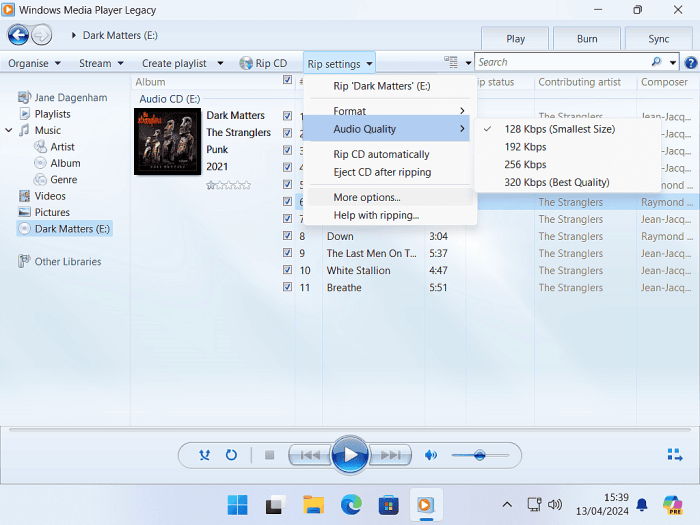
Source: co.uk
Deep within the digital archives of dedicated music collectors, a quiet crisis unfolds daily when dealing with obscure independent releases. Transforming a physical silver disc into a pristine digital file is only the opening act of an intricate archival journey. Once the audio streams are safely housed on a hard drive, they demand proper context to be recognized by modern media servers.
This delicate curation process transforms raw binary data into a navigable, beautifully organized sonic library.
Every digital audio file carries an invisible payload of textual architecture that dictates how media players categorize and display musical works. Understanding this structural anatomy is essential for maintaining order across diverse playback ecosystems. The two primary paradigms dominating the landscape operate through distinct methods of data encapsulation.
Accurate metadata architecture transforms chaotic digital storage into a harmonious, instantly accessible sanctuary of sound.
Structural anatomy of audio tagging formats
Legacy MP3 files rely primarily on ID3 structures, specifically the robust ID3v2 standard, which appends binary data frames directly to the beginning of the audio stream. These frames function like specialized filing cabinets, utilizing standardized identifiers such as TIT2 for titles and TPE1 for contributing artists. However, ID3 implementations often suffer from character encoding friction, frequently stumbling when attempting to display non-Latin scripts or specialized regional typography used by niche global labels.
In contrast, lossless codecs like FLAC utilize native comment blocks embedded within the container file structure. Instead of rigid frame identifiers, FLAC comment blocks operate on a flexible key-value pair system, written simply as uppercase strings like ARTIST=Name or GENRE=Ambient. This modern approach accommodates limitless custom fields without breaking compatibility, offering a resilient framework for complex musical arrangements that require granular cataloging details.
Navigating the decentralized world of volunteer-run metadata repositories introduces significant hurdles for rare and underground releases. When media servers query online acoustic fingerprinting databases, obscure albums frequently return zero results or, worse, incorrect matches due to non-standard track configurations. Collectors must manually bridge this gap, battling inconsistent release dates, missing catalog numbers, and typographical errors introduced by well-meaning contributors who processed regional pressings without standardized oversight.
Establishing uniformity across heterogeneous media center applications requires a disciplined approach to directory structures and file naming conventions. Without a predictable hierarchy, modern playback software struggles to group multi-disc sets, split albums, or compilation records correctly. Implementing a strict logical taxonomy prevents digital chaos from infiltrating the server environment.
The following structural reference Artikels the core metadata fields required for seamless media server integration, detailing how different tagging layers manage essential track attributes.
| Taxonomy Field | ID3v2 Equivalent Frame | FLAC Comment Key | Operational Purpose |
|---|---|---|---|
| Genre Classification | TCON | GENRE | Categorizes the primary musical style to enable broad stylistic sorting and playlist generation. |
| Composer Credits | TCOM | COMPOSER | Attributes the underlying songwriting and structural creation to the original author, vital for classical and jazz. |
| Track Numbering | TRCK | TRACKNUMBER | Defines the exact sequential playback order of songs within an album container. |
| Replay Gain Values | TXXX (Custom User Frame) | REPLAYGAIN_* | Stores calculated peak and RMS volume adjustments to normalize loudness across disparate tracks during playback. |
To achieve flawless sorting across complex hardware and software ecosystems, media enthusiasts rely on strict structural blueprints for file organization. The following hierarchical directory model ensures that every album is indexed accurately without triggering duplicate entries or missing artwork assets.
- Utilize a root music directory divided strictly by primary artist names, ensuring that featured guest artists do not spawn unnecessary parent folders.
- Nest a specific album directory inside the artist folder, strictly formatted using the release year followed by the official album title in brackets.
- Prepend two-digit track numbers to every audio file name, separated by a hyphens, to guarantee operating systems display files in correct chronological sequence.
- Embed high-resolution cover artwork directly into the folder as a standardized image file named folder.jpg to satisfy legacy server graphic requirements.
Summary

Source: lifewire.com
Embracing the transformation of physical music archives into pristine digital collections ultimately restores a lost sense of permanence and genuine connection to our favorite albums. By mastering the delicate balance between technical accuracy, legal understanding, and thoughtful organization, every listener can build a timeless sanctuary of sound that stands resiliently against the fleeting nature of modern digital consumption.
