can you add more synths to audiostuff opens the door to a profound auditory journey where modern electronic layering meets the timeless quest for sonic perfection. Across dimly lit studios and massive professional mixing environments, artists relentlessly push boundaries to discover how frequency manipulation, harmonic saturation, and intricate oscillator configurations can completely redefine a sonic landscape.
Every decision made at the mixing console ripples through the air, transforming flat recordings into vibrant masterpieces. As producers grapple with headroom management, transient response, and phase cancellation, the ultimate mission remains clear: to craft immersive soundscapes that captivate the human spirit and elevate the art of modern music production to unprecedented heights.
Audiophiles frequently debate whether can you add more synths to audiostuff enhances the overall sonic landscape.
In the relentless pursuit of acoustic perfection, sound architects continuously evaluate the boundaries of modern music production. The deliberate expansion of synthetic instrumentation introduces a complex matrix of frequencies that profoundly alters the listener’s journey. Enthusiasts and professionals alike find themselves at a creative crossroads, weighing the artistic benefits of lush arrangements against the risk of sonic clutter. Navigating this delicate balance requires a deep appreciation of both historical precedents and the intricate physics of sound design.
The journey of electronic layering stretches back to the mid-twentieth century, transitioning from bulky modular systems housed in academic laboratories to the accessible digital workstations of today. Early pioneers meticulously spliced magnetic tape and manipulated voltage-controlled oscillators to build unprecedented acoustic environments. As microprocessors evolved, producers gained the unprecedented ability to stack dozens of independent tracks, transforming sparse electronic arrangements into towering cathedrals of sound.
This historical progression redefined contemporary aesthetics, proving that technological innovation continually expands the emotional palette available to modern creators.
Acoustic Interference Mechanisms Within Dense Oscillator Networks
Understanding the internal physics of sound demands a close examination of how complex waveforms interact inside a shared acoustic spectrum. When multiple oscillators operate simultaneously, they inevitably generate energy across overlapping frequency bands. This physical phenomenon, known as frequency masking, occurs when a louder or more dominant sound obscures a quieter or similarly pitched signal, rendering specific sonic details imperceptible to the human ear.
To fully grasp this acoustic challenge, one must explore the intricate behavior of sound waves colliding within a confined auditory field.
Every individual synthesizer voice projects fundamental frequencies accompanied by a rich cascade of upper harmonics. As producers introduce additional synthetic layers to enrich the mix, these harmonic overtones begin to occupy identical spatial and spectral coordinates. When two or more waveforms of similar frequency and phase converge, constructive interference can drastically amplify localized energy, while destructive interference creates abrupt cancellations and tonal thinning.
This relentless competition for bandwidth overwhelms the acoustic space, obscuring the delicate transient responses and subtle timbral nuances that give individual instruments their unique character. Consequently, the pristine clarity of the mix dissolves into a thick, uniform fog where individual elements lose their distinct identity. Mastering engineers and sound designers must deploy surgical equalization, dynamic sidechain compression, and precise spatial panning to carve out dedicated sonic real estate for each oscillator.
By actively managing these microscopic acoustic collisions, producers restore transparency to the mix, allowing densely layered compositions to breathe with exceptional fidelity and emotional impact.
Comparative Analysis of Polyphony Architecture and Processing Boundaries
Hardware and software synthesis platforms approach polyphony through fundamentally different engineering paradigms, each imposing distinct constraints on the creative process. Reviewing these technological frameworks provides essential insight into how modern studios manage massive computational workloads without sacrificing audio integrity.
| Architecture Type | Polyphony Limitation | Latency Characteristics | Resource Management |
|---|---|---|---|
| Analog Hardware | Strictly bound by physical voice cards | Zero intrinsic processing delay | Fixed thermal and electrical draw |
| Digital Hardware | Governed by dedicated DSP chip capacity | Ultra-low, fixed buffer speeds | Optimized for specific internal algorithms |
| Native Software | Dependent on host CPU processing power | Variable based on buffer size | Shared system memory and processing threads |
| Cloud-Rendered Audio | Scalable across remote server clusters | Network-dependent roundtrip time | Dynamic resource allocation on demand |
Cognitive Processing of Complex Harmonic Structures
The human brain processes intricate layers of synthetic sound through a sophisticated neural network that translates physical vibrations into deep emotional states. Dense harmonic textures stimulate multiple regions of the auditory cortex simultaneously, triggering profound psychological responses that range from intense focus to overwhelming euphoria. This auditory immersion relies entirely on the brain’s remarkable capacity to parse complex sonic information and extract meaning from chaotic environments.
When vast arrays of synchronized oscillators flood the auditory system, the mind attempts to categorize and isolate every distinct frequency stream. Rich, multifaceted harmonic structures stimulate a sense of immense spatial grandeur, making the listener feel enveloped within a living, breathing acoustic architecture. This sensory saturation encourages deep introspection, as the intricate interplay of evolving timbres evokes vivid memories and complex emotional narratives.
However, if the density exceeds the brain’s cognitive parsing capacity, the experience shifts from inspiring to fatiguing. Carefully balanced layers invite the listener into a state of rapt attention, proving that the psychological resonance of synthesized music depends heavily on the thoughtful organization of its constituent elements.
Producers often wonder if adding more synths to audiostuff ruins the dynamic range of a mix

Source: futurecdn.net
Modern electronic music production thrives on layers of sound, yet creators frequently confront a critical sonic bottleneck when stacking electronic instruments. Studio professionals persistently investigate how heavy instrument stacking impacts the breathing room of a master track, weighing the artistic desire for wall-to-sound thickness against the technical necessity of maintaining pristine transient punch. Every single electronic layer introduced into a project demands physical space within the stereo field, fundamentally altering the fragile ecosystem of the frequency spectrum.
The relentless accumulation of digital signal processing tracks initiates a precise mathematical degradation of available audio headroom. In a 32-bit floating-point digital audio workstation, internal clipping is technically avoided by massive numerical margins, but the summation bus suffers immensely once multiple tracks converge. Mathematically, summing $N$ uncorrelated signals increases the root-mean-square amplitude by a factor of roughly $10 \log_10(N)$ decibels, while fully correlated or in-phase signals can spike peak amplitudes linearly by a factor of $N$.
When dozens of aggressive electronic leads and thick pads sum together, the inter-sample peaks push against the master ceiling relentlessly. This forces mastering limiters to clamp down excessively on transient responses, flattening the micro-dynamics that give music its emotional pulse. The result is a fatiguing, lifeless wall of noise where the kick drum and snare no longer punch through the mix because the transient headroom has been completely cannibalized by cumulative digital signal summation.
Sidechain Compression Techniques for Electronic Leads
Accommodating towering stacks of electronic leads requires surgical dynamic control to prevent instrumental congestion across the stereo field. Precise sidechain compression acts as an invisible architectural sculptor, carving out intentional pockets of silence in dense pad textures exactly when a soaring lead synthesizer demands absolute dominance. Achieving this transparent separation begins by routing the primary lead synthesizer as the key input to a dedicated compressor instantiated on the stereo bus of the secondary rhythmic pads and background atmosphere tracks.
The attack time must be precisely calibrated, typically ranging between 5 to 15 milliseconds, allowing the initial transient of the incoming lead to slice through completely uninhibited before the compression engages. Simultaneously, the release time needs careful synchronization with the internal tempo of the composition, usually set between 80 to 200 milliseconds, ensuring the background bed gracefully pumps and recovers in rhythm with the musical phrasing rather than creating audible, jarring volume artifacts.
Furthermore, utilizing multiband sidechain compression isolates this ducking effect exclusively to the congested 1 kHz to 4 kHz midrange frequencies where human ears are most sensitive, leaving the foundational sub-bass and airy high frequencies completely undisturbed. By implementing this frequency-conscious dynamic carving, producers preserve the lush, enveloping warmth of the background soundscapes while granting the incoming electronic leads an unobstructed sonic pathway to captivate the listener.
Real-life tracking sessions in professional electronic dance music production demonstrate that genres like progressive house rely heavily on this exact multi-stage sidechain routing to maintain perceived loudness without sacrificing the natural ebb and flow of the musical arrangement.
Specific equalization notches are absolutely vital to establish sonic boundaries, ensuring that competing midrange frequencies from multiple oscillators do not collide and create phase cancellation or muddy textural buildup.
- Execute a narrow Q-factor notch filter at exactly 315 Hz on competing sub-melodies to eliminate terminal boxiness and free up fundamental body space for the primary lead synthesizer.
- Apply a gentle, wide-band attenuation of 2 dB centered around 650 Hz on background polyphonic arpeggios to prevent nasal frequency masking against the vocal range and principal melodic hooks.
- Carve out a precise surgical cut with a Q-factor exceeding 8.0 at 1.8 kHz on background supersaw chords, allowing the biting upper-formants of the leading electronic instrument to cut cleanly through the mix without relying purely on raw volume increases.
The mixing console resembles a sprawling, high-stakes industrial control room under siege, bathed in the hypnotic, erratic glow of neon red and amber LED peak meters. Rows of physical faders vibrate with relentless kinetic energy as chaotic, unbridled saw waves and unpredictable pulse-width modulation signals surge aggressively through the master channels. A dense thicket of black patch cables snakes across the analog summing gear like tangled vines, carrying torrential streams of raw, harmonically rich electronic frequencies that threaten to overflow the digital boundaries.
Every waveform display flickers violently with jagged, razor-sharp peaks, painting a vivid picture of sonic warfare where competing synthesizers aggressively claw for dominance over every available decibel of headroom.
Sound designers experiment endlessly to see how can you add more synths to audiostuff transforms a flat recording.

Source: getthatprosound.com
Modern acoustic environments demand a delicate balance between organic warmth and electronic precision, especially when creators seek to elevate stagnant audio files into vibrant sonic masterpieces. Across major production studios worldwide, meticulous experimentation reveals that the deliberate integration of synthetic elements breathes new life into otherwise sterile recordings. This fusion of traditional acoustics and futuristic synthesis opens unprecedented pathways for sonic exploration.
The alchemy of modern music production lies in the deliberate juxtaposition of tactile, breathing instruments and calculated electronic tension. When sound sculptors approach a lifeless take, they initiate a rigorous process of spectral analysis to find the frequency gaps left vacant by traditional microphones. By identifying these pockets of acoustic inertia, engineers lay the groundwork for a symbiotic relationship between organic wood or brass and the raw, unyielding power of voltage-controlled oscillators.
Creative Workflow of Acoustic and Modular Blending
Bridging the gap between physical resonance and complex electricity requires a structured methodology that respects the transient nature of both worlds. The workflow begins by capturing dry, pristine performances using high-end ribbon microphones, ensuring every nuance of the artist’s touch is faithfully translated into the digital audio workstation.
- Phase alignment of acoustic transients with trigger signals from modular gate outputs to ensure absolute rhythmic cohesion.
- Re-amping acoustic stems through physical spring reverbs and low-pass gate modules to impart analog saturation and harmonic grit.
- Multiband sidechain compression driven by the acoustic percussion tracks to dynamically duck competing frequencies in the synthesizer layers.
Following the initial routing phase, engineers utilize envelope followers to map the physical dynamics of the acoustic performance directly to the filter cutoffs of the modular synths. This reactive programming ensures the synthetic elements never overpower the source material, but instead act as an extension of the original performance. The resulting soundscape retains the human imperfection of the player while gaining the hypnotic, otherworldly textures of modern hardware.
Spatial Resolution Through Binaural Panning Techniques
Modern arrangements frequently suffer from sonic congestion when dozens of competing arpeggiators occupy the exact same central stereo field, creating a dense wall of sound that fatigues the listener. Traditional stereo widening tools often introduce phase cancellation issues, muddying the lower-mid frequencies and obscuring the foundational rhythm section. To salvage these over-crowded mixes, acoustic architects turn to advanced binaural panning algorithms that manipulate inter-aural time differences and spectral filtering to place sounds accurately in a three-dimensional virtual space.
By mapping each arpeggiator to a specific coordinate along the azimuth and elevation planes, the human brain instantly separates the overlapping frequencies naturally, mirroring how we localize sounds in the physical world. This psychoacoustic approach treats the stereo spectrum not as a flat canvas, but as a spherical dome where every synthesizer finds its own unobstructed altitude and depth. Consequently, high-speed sequencer lines no longer mask each other, allowing intricate melodic counterpoint to emerge with crystal clarity without requiring volume reduction.
Implementing this spatial strategy transforms a chaotic wall of synthetic noise into a transparent, immersive listening environment where every single rhythmic pulse breathes independently.
Modulation Source Rhythmic Complexity Categorization
Understanding the internal clocking and behavioral patterns of modulation sources is essential for maintaining groove and momentum in complex electronic arrangements. The following structured matrix Artikels the operational characteristics of various modulation types based on their underlying rhythmic architecture.
| Modulation Source | Rhythmic Behavior | Primary Application | Complexity Level |
|---|---|---|---|
| LFO (Low-Frequency Oscillator) | Cyclic, Tempo-Synced | Pumping filter sweeps, tremolo | Low |
| Sample and Hold | Stochastic, Clock-Driven | Random pitch steps, glitch accents | Medium |
| Complex Function Generators | Multi-Stage, Non-Linear | Evolving timbre morphing, rhythmic envelopes | High |
| Euclidean Sequencers | Algorithmic, Polyrhythmic | Generative percussion triggers, phasing rhythms | Advanced |
Selecting the appropriate modulation matrix ensures that the added synthesizers dance around the core groove rather than fighting against the established tempo. By utilizing algorithmic sources alongside traditional LFOs, producers achieve a dynamic interplay that mimics the subtle human variations found in live instrumental performances.
Sub-Bass Injection for Acoustic Revival, Can you add more synths to audiostuff
In a historic preservation studio in downtown Nashville, veteran mix engineer Marcus Vance stared at a multitrack recording from a 1974 folk session that sounded remarkably thin and completely devoid of modern low-end authority. The original upright bass performance, captured on a deteriorating magnetic tape, lacked the chest-compressing weight required by contemporary broadcast standards, rendering the recording commercially non-viable for a planned cinematic reissue.
Instead of reaching for standard equalization which only amplified tape hiss and muddy resonance, Marcus deployed an aggressive sub-bass injection technique using a custom-calibrated analog synthesizer running parallel to the original acoustic track. He routed the direct output of the upright bass through a high-precision envelope detector, which in turn triggered a pure sine wave sub-oscillator tuned precisely one octave below the fundamental root notes of the performance.
To ensure the synthetic reinforcement felt entirely organic, he applied a subtle saturation stage modeled after vintage tube amplifiers, blending the harmonic overtones of the original acoustic wood with the subterranean power of the oscillator. The visual representation of the waveform shifted dramatically on the studio monitors, transforming from a sparse, fragile line into a rich, robust landscape anchored firmly by a solid low-frequency foundation.
When playback commenced, the revitalized track retained every ounce of its vintage charm and emotional vulnerability, yet commanded the room with the undeniable physical presence of a modern blockbuster mix.
True sonic innovation occurs not by masking deficiencies with endless layers of noise, but by forging an unbreakable emotional bond between organic imperfection and calculated synthetic precision.
Mixing engineers constantly evaluate whether can you add more synths to audiostuff disrupts the fundamental groove of a rhythm section.

Source: 99sounds.org
Deep within the glowing labyrinth of the modern recording studio, professionals navigate a relentless sonic puzzle. Every dial turned and fader pushed represents a deliberate choice in the ongoing quest for absolute sonic clarity. When the conversation turns to the delicate balance between rhythm and electronic layers, careful analytical listening meets passionate artistic vision. The pursuit of perfection requires an unyielding dedication to preserving the core pulse of the music while embracing the rich textures of modern electronic production.
Layering extra synthesizers breathes vibrant energy into your mix, yet pristine clarity remains essential. Before evaluating your acoustic space, remember hopw toc lean iems guarantees precision listening so every electronic wave shines. Embrace this brilliant workflow upgrade to elevate your musical journey and truly master modern sound design today.
When the pursuit of massive wall-of-sound production takes precedence, the initial strike of a drum kit often pays a heavy price. Detail the transient response degradation caused by overloading a master bus with uncompressed electronic elements reveals a startling technical reality. As densely populated electronic layers compete for limited headroom, the fast, natural peaks of acoustic drums and percussion suffer from aggressive limiter clamping.
This phenomenon, known scientifically as inter-sample peak distortion and excessive downward compression pumping, robs the rhythm section of its natural punch and vitality. Instead of striking through the mix with crisp definition, the kick drum and snare begin to slouch, smothered by the relentless energy of unchecked sawtooth and square waves. The resulting audio landscape loses its sense of physical impact, trading dynamic excitement for a flattened, fatiguing wall of noise that ultimately drains the track of its hypnotic groove.
Phase cancellation phenomena happening when duplicating stereo patches across multiple buses
Audio production frequently flirts with the seductive illusion that bigger automatically means better, leading creators to duplicate stereo patches across multiple routing paths. Understanding the underlying physics of wave interference requires examining how sound pressure waves interact when they travel through distinct digital and analog signal chains. Sound travels as a longitudinal wave of alternating compression and rarefaction, characterized by amplitude, frequency, and phase relationships.
When identical or nearly identical stereo patches are duplicated across separate auxiliary buses, minute processing delays, plugin latency discrepancies, and routing anomalies inevitably occur.
Even a microscopic sample-level delay—often measured at less than one millisecond—introduces destructive interference across specific frequency bands when these duplicated paths sum back together at the stereo master bus. High-frequency information, vital for air and presence, begins to comb-filter, creating deep, sweeping notches in the frequency spectrum that sound hollow and phasey. Furthermore, low-end frequencies suffer catastrophic summation failures. When low-frequency waveforms out of phase by one hundred and eighty degrees combine, their amplitudes subtract rather than add, completely gutting the sub-bass foundation and leaving the rhythm section sounding thin and anemic.
Visualizing this acoustic anomaly paints a vivid picture of invisible mathematical conflict. Imagine two pristine, mirror-image ocean waves rolling toward each other with absolute synchronization, only for a subtle current to shift one wave fractionally out of step. Instead of creating a towering crest of rich audio energy, the peaks crash directly into the troughs, effectively neutralizing the water’s kinetic force.
In the digital audio workspace, this translates to spectral energy vanishing into silence, forcing mixing engineers to meticulously audit routing matrices, phase-invert individual channels, or employ precision alignment tools to restore the lost weight and dimensional integrity of the performance.
Destructive phase cancellation acts as an invisible thief in the mixing console, systematically erasing lower-mid warmth and high-end detail whenever redundant stereo signals collide without proper temporal alignment.
Calibration steps for transient shapers on heavily layered electronic beds
Restoring lost punch and definition amidst a dense forest of electronic pads and leads demands absolute precision in dynamic control. Transient shaping tools provide the surgical capability needed to carve out space, ensuring that rhythmic elements retain their authority without sacrificing the immersive atmosphere of the background layers. Implementing these tools requires a methodical workflow to isolate and accentuate the critical attack phases of the audio material.
- Begin by soloing the rhythm section alongside the master electronic bus to accurately gauge the existing masking and loss of impact.
- Insert a dedicated transient shaper plugin onto the electronic sub-group, bypassing all other dynamic processors to establish a clean calibration baseline.
- Adjust the detector frequency bandwidth to target the specific mid-to-high frequency range where the snap of the percussion needs to pierce through the synthetic textures.
- Dial in a moderate positive attack gain increase, watching the gain reduction meters closely to ensure the initial click or thump of the rhythm is artificially emphasized without introducing digital clipping.
- Reduce the sustain control slightly to shorten the decay tails of the surrounding electronic beds, effectively creating micro-pauses that allow the rhythm section’s natural groove to breathe.
Spatial dimensions created by placing distant pad textures behind upfront percussion tracks
Crafting a truly three-dimensional mix relies heavily on psychoacoustic principles, manipulating volume, frequency balancing, and time-based effects to trick the human brain into perceiving physical depth. Placing lush, expansive pad textures far back in the soundstage while keeping rhythm tracks intimately close establishes a breathtaking contrast. This spatial hierarchy mirrors natural acoustic environments, where sounds closest to the listener exhibit high transient clarity, prominent high-frequency detail, and a high direct-to-reverberant sound ratio.
When wondering if you can add more synths to audiostuff for that extra sonic depth, precision listening becomes essential, much like discovering acoustic clarity through very expensive headphones that reveal hidden frequencies. Elevate your creative mix today because exploring whether you can add more synths to audiostuff transforms ordinary beats into extraordinary auditory journeys.
By utilizing long, modulated algorithmic reverbs with high-frequency damping and wide stereo imaging on the pad layers, mixing engineers push those elements deep into the virtual horizon. Simultaneously, keeping the percussion dry, punchy, and centered anchors the listener’s focus right at the front of the speakers. This intentional juxtaposition creates an expansive acoustic canyon. The listener perceives a vast, cinematic space where massive, distant atmospheric waves surround and cushion a tight, aggressive, and driving core rhythm section, achieving both immense density and pristine clarity.
When crafting rich electronic soundscapes, pushing synths forward elevates the entire mix, urging creators to explore deeper acoustic textures. Today’s latest audio gear reports reveal that upgrading your monitoring setup makes all the difference, particularly when you experience your tracks through a precision cca phoenix iem that unveils every hidden sonic layer. Embracing this clarity empowers producers everywhere to keep stacking vibrant synths with absolute creative confidence.
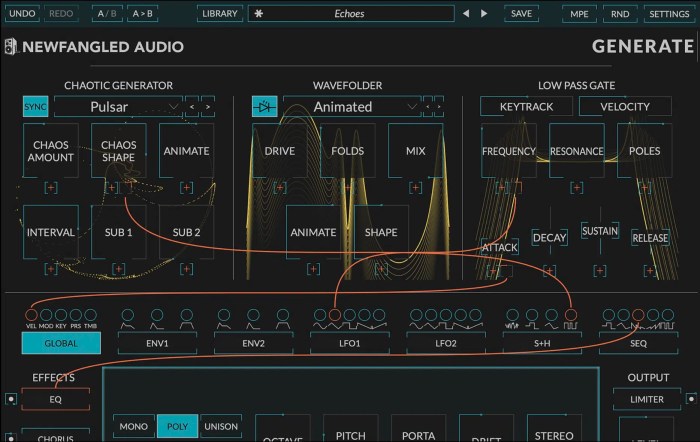
Independent artists frequently test the limits of what happens when can you add more synths to audiostuff in their bedroom studios
Source: unison.audio
Deep inside suburban spare bedrooms and converted downtown closets, a quiet sonic revolution unfolds daily. Modern creators equipped with laptop arrays and audio interfaces constantly push creative boundaries by exploring how can you add more synths to audiostuff, transforming simple acoustic bedroom jams into sprawling electronic symphonies. This relentless pursuit of sonic density blurs the historical lines between professional commercial tracking spaces and independent home setups, redefining modern music production.
As virtual instruments multiply across digital audio workstation timelines, creators inevitably confront the harsh realities of processing limitations and creative discipline. The pursuit of massive electronic arrangements requires a delicate balance between technical endurance and artistic vision. Navigating these complex production environments demands both cutting-edge digital optimization and a deep appreciation for acoustic restraint.
When wondering if you can add more synths to audiostuff, remember that pristine clarity matters. By introducing the kiwi ears astral , every shimmering electronic wave resonates with breathtaking precision, illuminating your ultimate creative vision. Embrace this sonic evolution today, ensuring you can always add more synths to audiostuff without losing an ounce of pure harmonic magic.
Technical Constraints and Polyphonic Realities
Working beyond standard processing thresholds exposes creators to severe technical bottlenecks, particularly when rendering massive polyphonic patches on vintage hardware or modest home computers. A single complex patch utilizing multiple detuned sawtooth oscillators, heavy unison spreading, and dynamic pulse-width modulation can easily consume vast amounts of processing power. When multiple instances of these resource-heavy emulations run simultaneously, native central processing units frequently peak, causing audible buffer underruns, digital artifacts, and catastrophic audio dropouts.
Producers managing hardware setups often face strict voice-allocation limits inherent to analog circuitry and digital signal processor chips. Bouncing MIDI tracks to static audio files becomes an essential workflow necessity rather than a mere organizational choice. Freezing tracks preserves valuable processing headroom, allowing artists to continue layering complex atmospheric pads, aggressive leads, and warm sub-bass frequencies without sacrificing system stability during critical tracking phases.
Aesthetic Philosophy of Minimalist Arrangements Versus Maximalist Sonic Walls
The eternal philosophical debate dividing contemporary electronic music producers centers on the ideological chasm separating minimalist restraint from maximalist excess. Minimalist arrangements operate on the foundational premise that space is the most valuable instrument in any mix. By restricting the palette to only the absolute essential frequencies, each individual element commands undivided attention from the listener. This approach champions clarity, transient punch, and structural transparency, allowing subtle shifts in timbre and rhythm to carry the emotional weight of the composition.
Producers adhering to this philosophy treat silence not as an empty void, but as a deliberate compositional tool that gives sound its physical dimension and breathing room.
Conversely, maximalist sonic walls construct monumental architectures of sound where individual components merge into a singular, overwhelming wave of audio. This aesthetic philosophy embraces saturation, harmonic complexity, and psychoacoustic layering to evoke a sense of boundless immersion. By stacking dozens of independent synthesizer voices, creators sculpt rich, shifting textures that envelop the listener in a dense fog of frequency and motion.
However, this density demands meticulous spectral management. Without precise equalization, sidechain compression, and careful stereo field placement, maximalist walls easily collapse into muddy, fatiguing sludge. The true master of maximalism orchestrates chaos with surgical precision, ensuring that even amidst a torrential downpour of detuned oscillators and modulated filters, every sonic layer maintains its unique structural integrity and purpose within the broader landscape.
Choosing between these divergent philosophies ultimately defines the artistic identity of the independent producer. Whether carving out a desolate, echoing minimalist landscape or erecting a towering cathedral of stacked analog synthesizers, the creator acts as both architect and curator of emotion.
Optimal Oscillator Allocations Across Musical Genres
Different musical styles demand vastly different approaches to oscillator density to maintain genre authenticity and mix clarity. The following table Artikels the recommended maximum oscillator counts per mix to achieve professional fidelity across various electronic genres.
| Musical Genre | Recommended Maximum Oscillators | Primary Sonic Focus | Mixing Priority |
|---|---|---|---|
| Ambient Techno | 64 to 96 | Evolving pads and granular textures | Extensive reverb tails and stereo width |
| Minimal House | 16 to 24 | Monophonic basslines and percussive plucks | Rhythmic groove and low-end translation |
| Cyberpunk Synthwave | 128 to 256 | Massive unison leads and brassy arpeggios | Mid-range saturation and aggressive compression |
| IDM and Glitch | 32 to 48 | Complex modular sequences and noise generators | Transient precision and dynamic panning |
Tactile Control and Real-Time Automation
Bridging the gap between cold digital software and organic human expression often relies on the intimate, physical interaction between the artist’s hands and dedicated hardware controllers. Grasping a heavy, weighted aluminum cutoff knob provides immediate tactile feedback that mouse clicks and computer keyboards simply cannot replicate. As the physical dial turns, sweeping the low-pass filter across a dense wall of complex synthesizer patches, the high-frequency harmonics bloom and recede in real time.
True sonic alchemy occurs when human physical gesture meets voltage control, transforming static mathematics into living, breathing acoustic art.
Recording these physical movements as automation data breathes organic vitality into rigid, quantized sequences. The slight micro-timing fluctuations of human hands turning a resonance dial or modulating a wavefolder introduce an unrepeatable, living character to the production. This hands-on methodology anchors the producer firmly inside the creative process, turning the mixing console into an expressive instrument in its own right.
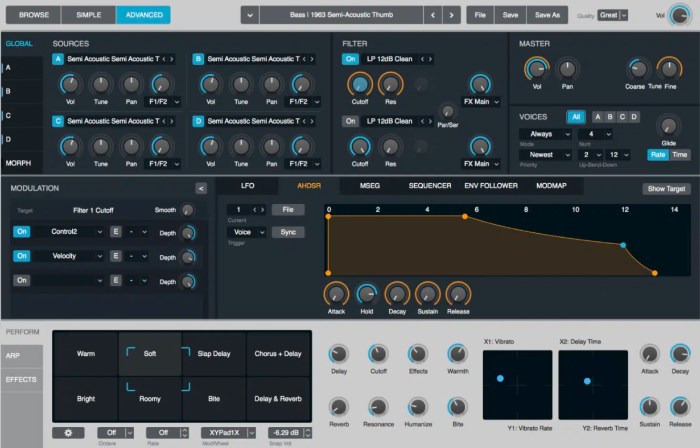
Acoustic purists often argue that exploring can you add more synths to audiostuff alienates listeners seeking natural instrumentation.
Source: unison.audio
The eternal friction between traditionalist preservation and electronic innovation defines the modern sonic landscape, where cultural divides run deeper than mere aesthetic preference. Deep within the music community, classical orchestral purists defend the unadulterated resonance of wooden bodies and brass bells against the relentless infiltration of voltage-controlled oscillators. This tension is not merely a stylistic disagreement; it represents a fundamental philosophical battle over authenticity, human expression, and the soul of modern composition.
Meanwhile, progressive sound sculptors embrace the infinite possibilities of synthesized soundscapes, viewing traditional boundaries as limitations rather than virtues. They argue that rigidly clinging to acoustic authenticity stifles the creative evolution required to capture the complex emotional realities of contemporary life.
Bridging this ideological chasm requires a nuanced understanding of how digital architectures can be manipulated to emulate the organic imperfections of the physical world. Rather than accepting the cold, sterile nature of pristine binary code, modern producers harness sophisticated psychoacoustic manipulation to trick the human ear into experiencing genuine emotional resonance. This fascinating phenomenon transforms our perception of sound, proving that technology and organic feeling are not mutually exclusive when guided by masterful engineering and artistic intent.
Psychoacoustic mechanisms of digital warmth generation
When investigating how the human auditory cortex processes sound, psychoacoustic saturation emerges as a vital phenomenon that bridges the gap between cold digital precision and organic warmth. Pristine digital waveforms, characterized by their mathematically rigid perfection, often lack the subtle harmonic impurities that the human ear instinctively associates with living, breathing instruments. By strategically introducing controlled layers of subtle harmonic distortion, engineers can trick the human brain into perceiving fullness and physical presence where only mathematical linearity previously existed.
This process relies heavily on the generation of even-order and odd-order harmonics, which mimic the natural saturation behaviors found in vacuum tubes and magnetic tape saturation units. When these upper partials are meticulously woven into the frequency spectrum, the brain automatically fills in the missing psychoacoustic data, interpreting the sterile digital signal as rich, dense, and physically vibrating. Furthermore, microscopic temporal and phase modulations—often imperceptible to conscious analytical listening—introduce a sense of living movement that prevents the listener from experiencing auditory fatigue.
This clever manipulation of human psychoacoustics proves that warmth is ultimately a perceptual experience rather than a strict physical property, allowing electronic instrumentation to achieve an emotional depth that rivals any traditional acoustic ensemble.
Unconventional distortion hardware for analog emulation
Infusing sterile digital patches with authentic analog character demands specialized hardware designed to challenge pristine signal paths. The following inventory highlights revolutionary physical stompboxes and processors utilized by industry-leading producers to break down the barriers between electronic and acoustic realms.
- The germanium-core wavefolder unit, which aggressively folds incoming voltage peaks to generate complex, bell-like harmonic overtones reminiscent of overdriven modular synthesizers.
- The magnetic multi-head tape delay emulator, featuring aging motors and degraded oxide ribbons that introduce authentic wow, flutter, and warm low-end saturation.
- The high-voltage tube starvation processor, engineered to operate vacuum tubes well below their optimal plate voltages to produce chaotic, fuzzy, and deeply organic compression.
- The optical photocell distortion pedal, which utilizes internal light bulbs and light-dependent resistors to apply a distinctly smooth, nonlinear compression curve to harsh digital synths.
True analog warmth is not merely a frequency response curve, but a living record of physical chaos captured in real-time voltage fluctuations.
The visual atmosphere of a studio dedicated to this sonic alchemy is nothing short of hypnotic, serving as a physical sanctuary where technology and art merge into a singular, breathing entity. Inside the dimly lit control room, the air hums with palpable energy as massive studio monitors project deep, resonant low-frequency oscillations that physically vibrate the floorboards beneath the engineer’s feet.
Glowing amber and crimson vacuum tubes cast long, dancing shadows across mixing consoles, while banks of modular synthesizers flash with pulsing LFO indicators that rhythmically map out the heartbeat of the composition. Tangible patch cables snake across brushed aluminum surfaces, connecting disparate electronic modules into a chaotic web of creative potential. This immersive environment captures the exact moment where cold, calculating digital parameters dissolve into a warm, deeply humanized sonic experience, rendering the debate between acoustic purism and electronic exploration beautifully obsolete.
Conclusion
Ultimately, the continuous exploration of dense sonic arrangements reminds us that music production is both an exact science and a boundless creative pursuit. By carefully balancing technical precision with unbridled artistic vision, creators can harness the immense power of electronic sound to forge enduring connections and inspire listeners around the globe.
