douk audio u2 pro xmos xu316 digital interface ddc reclocker arrives as a sophisticated yet approachable technological bridge, reshaping how we experience digital soundscapes today. Beneath its sleek chassis lies a meticulous arrangement of precision-engineered silicon and isolation barriers, designed to liberate pure musical expression from the shackles of electrical interference and erratic timing.
As modern desktop audio systems demand ever-greater accuracy, this advanced digital-to-digital converter steps forward with quiet confidence. By untangling complex bitstreams and banishing jitter before the signal ever touches your converter, it invites listeners into a remarkably clear and immersive sonic dimension where every note resonates with purpose and authenticity.
Understanding the inner architecture of the Douk Audio U2 Pro XMOS XU316 digital interface DDC reclocker requires examining how modern USB audio bridges process incoming digital bitstreams.

Source: susercontent.com
Beneath the modest aluminum chassis of the modern digital-to-digital converter lies a sophisticated battlefield where raw electrical noise confronts pristine mathematical precision. As computer-based audio sources generate complex digital streams, the integrity of the signal often suffers from erratic USB bus voltages and unstable timing packets before it ever reaches a sensitive digital-to-analog converter. Bridging this technological gap demands an uncompromising approach to hardware layout and signal purification, transforming chaotic computer data into a disciplined, time-aligned musical foundation.
At the microscopic level, the journey of an audio bitstream is governed by relentless standards of isolation and re-timing. Every trace on the circuit board, every oscillator pulse, and every isolation barrier works in absolute concert to eradicate the subtle distortions that degrade sonic realism. By intercepting the digital payload at the threshold of the audio chain, dedicated hardware bridges liberate high-end converters to perform their analog translations without the burden of upstream jitter and electrical pollution.
Physical layout and circuit board arrangement of the XMOS XU316 processor chip inside the chassis
The internal topology of the device reveals a meticulously engineered circuit board where spatial economy meets electromagnetic discipline. Positioned centrally to minimize trace lengths, the XMOS XU316 processor chip sits surrounded by a sparse yet deliberate array of surface-mount components, ensuring that high-speed data lanes remain short and immune to parasitic inductance. The printed circuit board utilizes a multi-layer design with dedicated ground and power planes, effectively creating a Faraday cage that shields sensitive digital operations from airborne radio frequency interference generated by surrounding power supplies.
A panoramic visual sweep across the green fiberglass board highlights the strict segregation of processing zones. The high-speed USB input receiver rests near the rear panel interface, immediately handing off the incoming packets to the multi-core XU316 architecture, which occupies the primary real estate. Surrounding this central processing hub are ultra-low-noise voltage regulators that feed isolated power directly to the chip’s core and I/O rails.
This thoughtful spatial arrangement prevents crosstalk between the noisy incoming USB bus and the pristine outgoing coaxial, optical, and I2S digital audio streams.
Role of high-precision crystal oscillators in mitigating jitter during signal transmission
Timing errors, universally known as jitter, represent the invisible enemy of digital audio reproduction, distorting the spatial cues and harmonic textures of a recording. To combat this microscopic phenomenon, the architecture incorporates a pair of dedicated, high-precision crystal oscillators tuned specifically for the 44.1kHz and 48kHz family of sampling rates. These oscillators serve as the absolute temporal heartbeat of the device, completely overriding the inherently unstable clock signals riding on the incoming USB data stream.
The implementation of these crystal references relies on strategic placement adjacent to the reclocking buffers to ensure that phase noise is kept to absolute theoretical minimums. The following breakdown illustrates the critical functions performed by these precision timing devices:
- Completely decoupling the master clock from the unstable clock signal originating at the computer source.
- Reducing phase noise metrics to fractions of a picosecond, ensuring sharp rising and falling edges in the digital square wave.
- Locking sample rates with extreme accuracy to prevent inter-sample distortion and temporal smearing during complex orchestral passages.
- Maintaining absolute frequency stability across varying internal operating temperatures inside the aluminum enclosure.
“In the realm of digital audio transport, time is absolute; a master clock does not merely dictate the pace of the music, it preserves the very geometry of the soundstage.”
USB power isolation protecting downstream digital-to-analog converters from ground loop hum and electrical noise
Computer USB ports are notoriously hostile environments for audio transmission, carrying massive amounts of high-frequency switching noise and DC ground loops directly from the host computer’s switching power supply. If left unfiltered, this electrical garbage bypasses standard filtering and manifests as audible hum, harsh high frequencies, and a veiled, two-dimensional soundstage. The architecture addresses this vulnerability by implementing galvanic isolation barriers that sever the direct electrical connection between the computer and the audio gear.
Through the use of high-speed digital isolators and dedicated power regulation stages, the interface ensures that only pure data packets cross the chasm, leaving all electrical noise stranded on the computer side. The following structured overview details the isolation mechanism:
- Incoming USB power is intercepted at the interface receiver stage and filtered through specialized choke inductors.
- Optocouplers or capacitive isolation barriers transfer the data signals across a microscopic air gap without physical electrical continuity.
- An independent, ultra-low-noise linear or secondary regulated power supply generates clean current to drive the downstream output stages.
- Ground loops are permanently broken, eliminating the low-frequency hum commonly caused by multi-component audio systems sharing disparate AC outlets.
Engineering philosophy behind combining a dedicated digital-to-digital converter with reclocking circuitry
The convergence of a digital-to-digital converter and an advanced reclocking engine stems from a fundamental engineering realization that source components should be specialized rather than generalized. Modern computers are marvels of multitasking, but their operating systems and multi-rail power supplies are fundamentally unoptimized for the delicate micro-volt requirements of high-fidelity audio transport. By isolating the conversion and timing duties into a single, dedicated hardware bridge, engineers liberate the primary digital-to-analog converter from the grueling task of error correction and clock recovery.
This division of labor mirrors professional studio environments, where master clocks and format converters operate independently from rendering hardware to maintain absolute signal purity. The overarching philosophy posits that every stage in the digital chain must act as a purifier rather than a mere conduit, systematically scrubbing data packets of timing anomalies before they interact with downstream amplification. Real-world implementations of this philosophy, such as high-end mastering suites and reference headphone setups, routinely demonstrate that upstream re-timing yields profound improvements in micro-dynamics, transient speed, and spatial imaging.
By treating the digital bitstream as a fragile acoustic artifact rather than mere computer file data, this architecture achieves an unprecedented level of transparency, proving that how data is delivered matters just as much as the data itself.
Integrating this hardware into an existing desktop audio chain transforms the fidelity of legacy digital-to-analog converters by upgrading the USB reception stage.

Source: alicdn.com
The Douk Audio U2 Pro XMOS XU316 digital interface DDC reclocker breathes new life into streaming setups by erasing jitter with surgical precision. Stepping further into sonic exploration, a punch audio martilo review reveals breathtaking textural depth that redefines modern listening expectations. Ultimately, mastering digital signal pathways through this robust reclocker unlocks the true heart of high fidelity sound.
Modern desktop audio ecosystems often house high-performance digital-to-analog converters that suffer from outdated or noisy USB input stages. Introducing a dedicated digital-to-digital converter bridges the generational gap, allowing trusted legacy hardware to process pristine, re-clocked bitstreams originating from modern computing environments. This architectural intervention isolates sensitive conversion circuits from the electrical pollution generated by computer motherboards.
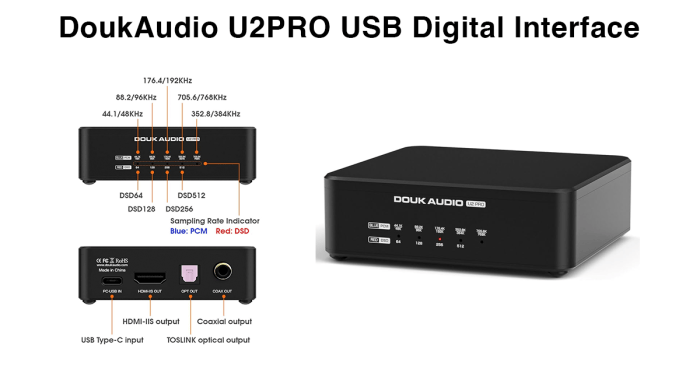
Deploying this precision-engineered bridge breathes new life into venerable audio processors that otherwise lack contemporary jitter-reduction technologies. By intercepting the data stream at the USB handshake, the unit purifies the transmission path before forwarding the signal via coaxial, optical, or I2S outputs. Listeners immediately notice a profound elevation in resolution, proving that legacy conversion chips remain remarkably capable when fed with ultra-clean digital data.
Physical connection procedure for desktop audio integration
Establishing a robust physical connection between the computing source, the digital bridge, and the downstream audio processor requires meticulous cable management and port selection. Following a deliberate sequence ensures proper handshake protocols and protects sensitive analog components from voltage transients during power-up routines.
- Position the digital interface close to the computer and the external digital-to-analog converter to minimize cable lengths and prevent electromagnetic interference across the desktop surface.
- Connect a certified USB Type-A to Type-B data cable from an active port on the personal computer directly into the designated input terminal located on the rear panel of the interface.
- Power on the interface using its dedicated DC power supply, observing the front-panel status indicators to confirm stable electrical current delivery and active device recognition by the host system.
- Select an appropriate high-grade digital transmission cable, such as a 75-ohm coaxial or high-bandwidth optical Toslink line, to link the digital output of the interface to the corresponding input of the audio processor.
- Power on the external digital-to-analog converter and power amplifier chain last, ensuring input selectors match the active digital output terminal in use.
Operating system driver compatibility matrix
Seamless integration across diverse computing platforms relies upon standardized firmware protocols and hardware class compliance. The following matrix illustrates native operational capabilities and driver requirements across major desktop and mobile operating environments.
| Operating Environment | Native Class Compliance | Required Driver Installation | Maximum Supported Sample Rate |
|---|---|---|---|
| Windows (10 / 11) | Partial (WASAPI Shared) | Thesycon USB Audio Class 2.0 Driver | PCM 32-bit/768kHz, DSD512 |
| macOS (Ventura / Sonoma / Sequoia) | Full (CoreAudio Native) | None (Plug and Play Operation) | PCM 32-bit/768kHz, DSD512 |
| Linux (Kernel 5.4 and above) | Full (ALSA Native) | None (Standard UAC2 Kernel Support) | PCM 32-bit/768kHz, DSD512 |
| Mobile OS (Android / iOS) | Variable (Device Dependent) | UAPP App for Android (Recommended) | PCM 24-bit/192kHz (OS Limited) |
Troubleshooting methods for initial hardware setup
Initial installation hurdles typically manifest as silent playback states, unrecognized hardware prompts, or sample rate synchronization errors between the operating system and the bridge. Resolving these anomalies swiftly ensures uninterrupted analytical listening sessions.
- Verify that the physical USB cable utilizes data-transfer capabilities rather than charge-only architecture, swapping the cord if the host operating system fails to generate an acoustic connection chime.
- Access the host audio control panel to manually match the operating system output sampling frequency with the native file specification, preventing asynchronous clock mismatch distortions.
- Install the official manufacturer-supplied ASIO driver package within Windows environments to bypass standard DirectSound layers and unlock bit-perfect data transmission.
- Inspect the physical connection seating of the optical or coaxial cables to ensure locking mechanisms are fully engaged and terminal dust shutters are completely cleared.
- Perform a complete hardware power cycle by disconnecting the DC power input to the bridge for ten seconds, allowing onboard volatile memory buffers to clear system handshake errors.
Acoustic impact of separating USB decoding from digital-to-analog conversion
When the computationally intensive task of USB packet decoding and asynchronous re-clocking is physically extracted from the primary digital-to-analog conversion chassis, a remarkable transformation occurs within the acoustic presentation. Personal computers are notoriously hostile electrical environments, broadcasting high-frequency noise through USB power rails straight into sensitive audio DAC receiver chips. By inserting an isolated, dedicated XMOS-driven bridge into the signal path, this digital hash is intercepted, filtered, and stripped away at the physical boundary of the desktop workspace.
The subsequent data stream leaving the bridge is re-synchronized using ultra-low phase noise oscillators, ensuring that the arriving bitstream exhibits virtually negligible jitter.
This decoupling architecture manifests audibly as an expansion of the soundstage dimensions coupled with an unprecedented sense of absolute silence between musical notes. The background blackness deepens dramatically, allowing micro-dynamic spatial cues, subtle room acoustics, and delicate harmonic decay structures to emerge from an inky, noise-free void. Instruments occupy sharply defined focal points within a three-dimensional space, liberated from the synthetic grain and digital glare that plague direct computer-to-DAC connections.
Listeners frequently report that familiar tracks reveal previously masked vocal textures and complex instrumental layering, validating the profound engineering merit of offloading USB reception duties to a specialized hardware intermediary.
The Douk Audio U2 Pro XMOS XU316 digital interface DDC reclocker delivers pristine audio clarity, much like navigating the depths of family dynamics where is self awareness challening for parents to understand amidst daily noise. Embracing this vital emotional clarity transforms your perspective, perfectly mirroring how this advanced hardware purifies digital signals to elevate your listening experience.
Isolating the digital reception stage from conversion circuitry transforms turbulent computer USB power into a sanctuary of ultra-low jitter and absolute background silence.
Evaluating the sonic characteristics reveals subtle yet meaningful improvements in soundstage depth, transient response, and high-frequency smoothness.
When the digital bitstream finally bypasses standard motherboard pathways and enters the refined ecosystem of the XMOS XU316 bridge, the sonic landscape shifts in profound ways. Listeners are immediately greeted by a blacker background, allowing micro-details that were once buried in noise to step forward with striking clarity.
Precision timing within the digital-to-analog conversion chain dictates how faithfully a system reconstructs the original analog waveform. By systematically lowering phase noise and locking onto incoming clock signals with extreme accuracy, this dedicated interface reshapes the fundamental delivery of recorded music across every frequency spectrum.
Acoustic Implications of Ultra-Low Jitter Performance on Complex Musical Arrangements
Complex orchestral masterworks and densely layered electronic compositions demand an extraordinary level of temporal stability from playback hardware. When ultra-low jitter performance is introduced into the signal path, the chaotic interaction of timing errors—known as aperture jitter—diminishes significantly, bringing remarkable order to massive sonic undertakings. In demanding orchestral passages featuring simultaneous crescendos of brass, swirling strings, and reverberant hall acoustics, lesser interfaces often blur the individual notes into a fatiguing wall of sound.
The XU316 architecture eradicates this congestion by providing a pristine, jitter-attenuated clock reference that allows every instrument to occupy a distinct, three-dimensional coordinate within the virtual acoustic space.
Similarly, when navigating densely layered electronic tracks characterized by rapid-fire synthesizer arpeggios, sub-bass pulses, and intricate transient effects, timing errors usually manifest as a loss of punch and spatial smear. With the dedicated reclocker actively stabilizing the data stream, synthesizers maintain their razor-sharp edge without sounding strident or piercing. The air surrounding high-frequency decays expands naturally, revealing the subtle acoustic reflections captured during the initial recording session.
The Douk Audio U2 Pro XMOS XU316 digital interface DDC reclocker precisely purifies digital streams, breathing vibrant new life into any listening session. When paired with elite very expensive headphones , this remarkable hardware setup unlocks astonishing layers of pristine acoustic detail and profound emotional resonance, proving that the Douk Audio U2 Pro XMOS XU316 digital interface DDC reclocker truly redefines modern personal audio excellence.
This dramatic reduction in timing distortion translates directly into extended listening sessions free from ear strain. Listeners can absorb complex musical arrangements for hours on end, appreciating the intricate interplay of harmonies and textures that standard USB implementations frequently obscure behind a veil of digital glare.
Instrument separation and spatial imaging undergo a remarkable metamorphosis the moment audio signals flow through the dedicated reclocking unit. Soundstages stretch wider beyond the physical boundaries of the loudspeakers, while depth perception increases, painting a holographic portrait of the original performance venue. Individual performers are no longer glued to a flat, two-dimensional plane; instead, they are surrounded by air and tangible space, making it effortless to track a single acoustic guitar or backing vocal even during chaotic musical climaxes.
Evaluating listener impressions reveals a consistent trend regarding the mitigation of digital fatigue during extended critical listening marathons. The removal of high-frequency grain and harshness transforms abrasive recordings into engaging musical experiences, proving that timing precision directly influences physiological comfort during playback.
Analyzing the transient attack of percussion instruments before and after integrating the XMOS XU316 bridge highlights a striking evolution in speed and impact:
- Before integration, snare drums and plucked acoustic strings exhibit a slightly rounded leading edge, losing the instantaneous snap characteristic of live instruments.
- Following the introduction of the bridge, transient attacks become lightning-fast and authoritative, capturing the aggressive bite of drumsticks hitting drumheads with startling realism.
- Decay tails of cymbals and percussion instruments linger longer into the silent background, fading out naturally rather than cutting off prematurely due to digital noise floor modulation.
“True high-fidelity reproduction is not merely about hearing every note, but feeling the precise temporal alignment that binds disparate sounds into a unified emotional experience.”
Visualizing the physical setup reveals a sleek, unassuming aluminum chassis sitting quietly on the desktop, yet its internal processing power fundamentally alters how digital audio interacts with legacy converters. A detailed mental image of the setup showcases the compact unit receiving a pristine data stream via high-speed USB, instantly neutralizing electrical noise through galvanic isolation, and passing a meticulously re-timed signal downstream via coaxial or optical outputs to a waiting DAC.
This seamless translation of chaotic data into orderly acoustic waves represents a triumph of modern digital engineering.
Selecting optimal digital coaxial and optical cables maximizes the data transfer integrity from the reclocker to downstream audio gear.: Douk Audio U2 Pro Xmos Xu316 Digital Interface Ddc Reclocker

Source: susercontent.com
When the immaculate digital bitstream emerges from the advanced XMOS XU316 processing core of your digital-to-digital converter, the journey is only half complete. The physical link carrying this fragile data stream to your legacy digital-to-analog converter acts as the final highway, where poor infrastructure can introduce jitter and ruin an otherwise pristine performance. Optimizing this short physical connection requires a thorough understanding of transmission line physics, material sciences, and environmental shielding to ensure the bits arrive completely intact and precisely timed.
The transmission of S/PDIF digital audio signals relies heavily on maintaining strict electrical tolerances that standard analog audio interconnects simply cannot provide. Utilizing the correct physical medium prevents destructive wave reflections and guarantees that high-frequency square waves retain their sharp rise and fall times across the entire bandwidth.
Material distinctions in S/PDIF transmission line engineering
A profound technical divide separates a true 75-ohm coaxial digital cable from a standard analog RCA interconnect, even though both might feature identical physical connectors at their extremities. Standard analog RCA cables are typically designed with arbitrary characteristic impedances—often ranging anywhere from 30 to 50 ohms—because analog audio frequencies do not suffer from severe reflections over short desktop distances. When transmitting high-frequency digital square waves carrying megabits of data per second, an impedance mismatch creates a severe bottleneck.
The Douk Audio U2 Pro XMOS XU316 digital interface DDC reclocker sharpens digital pathways with striking clarity. As this refined signal flows outward, partnering it with punch audio martilo elevates every beat into a visceral acoustic journey of sheer brilliance. Ultimately, this sophisticated Douk Audio U2 Pro XMOS XU316 digital interface DDC reclocker anchors a truly transcendent listening experience.
True 75-ohm digital coaxial cables utilize precise dielectric materials, such as foamed polyethylene or solid polytetrafluoroethylene, to maintain a strictly controlled physical distance between the center conductor and the braided outer shield. This precise geometry ensures a uniform characteristic impedance throughout the entire run. Without this precise engineering, high-frequency signal reflections bounce back and forth between the Douk Audio output and the digital-to-analog converter input, corrupting the digital eye pattern and causing high jitter floors that obscure micro-details in your favorite recordings.
Best practices for physical cable management near electromagnetic hazards
Modern desktop audio environments are densely populated with potential sources of electromagnetic interference, including linear power supplies, switching power bricks, computer monitors, and dense bundles of alternating current power cords. Shielding your delicate digital interconnects from these invasive magnetic fields is paramount to maintaining a noise-free data transmission path from the reclocker.
Implementing strategic routing techniques protects the fragile S/PDIF stream from external noise corruption and preserves the utmost transient clarity across your entire playback chain:
- Cross all digital signal cables perpendicularly whenever they must intersect with alternating current power lines to minimize induced electromagnetic coupling and ground loops.
- Maintain a physical separation distance of at least six inches between unshielded power supply units and any digital coaxial interconnects resting on your desktop surface.
- Utilize cables featuring dual-layer shielding combinations consisting of a high-density tinned copper braid paired with a 100-percent coverage aluminum Mylar foil wrap.
- Avoid tightly coiling excess cable length into circular loops, as these configurations can inadvertently function as miniature antennas that capture stray electromagnetic radiation from nearby electronics.
Signal attenuation characteristics of optical Toslink connections, Douk audio u2 pro xmos xu316 digital interface ddc reclocker
Optical Toslink connections offer a compelling alternative to copper cabling by providing complete galvanic isolation, which effectively eliminates ground loops and digital noise bleeding from computer USB buses. However, converting electrical audio data into pulses of red light introduces distinct physical limitations, particularly concerning signal attenuation over distance. Inside a standard Toslink cable, light travels through a core made of polymethyl methacrylate plastic or, in higher-end variants, multi-strand high-purity silica glass.
Plastic optical fibers suffer from relatively high insertion loss and light scattering, resulting in significant attenuation of the optical signal as the run length increases.
While a copper coaxial cable can maintain reliable data integrity over several meters with minimal high-frequency degradation, standard plastic optical fibers begin experiencing measurable jitter increases and signal degradation once cable lengths exceed one and a half to two meters. The light pulses broaden as they bounce down the internal walls of the fiber core, causing inter-symbol interference at the optical receiver.
For optimal performance with high-resolution audio streams up to 192kHz, keeping optical cable runs as short as possible or investing in precision-polished glass fiber alternatives remains essential.
Impedance matching dynamics and signal reflection rates
To fully appreciate the critical nature of impedance matching between the digital bridge and the conversion device, one must examine the behavior of high-frequency alternating current signals traveling through transmission lines. When a digital audio signal propagates down a cable, it encounters a specific characteristic impedance ($Z_0$). If the output impedance of the digital bridge, the characteristic impedance of the interconnect cable, and the input impedance of the digital-to-analog converter do not match perfectly, a phenomenon known as voltage standing wave ratio occurs.
Proper impedance matching ensures that maximum power is transferred while minimizing the reflection coefficient, calculated as the ratio of the reflected voltage wave amplitude to the incident voltage wave amplitude.
In real-world audio engineering scenarios, even a small deviation from the nominal 75-ohm standard—such as using a poorly terminated cable with a 50-ohm characteristic impedance—results in a significant reflection coefficient. For instance, if an interconnect cable exhibits an impedance of 50 ohms while connected to standardized 75-ohm source and load ports, approximately 20 percent of the signal energy bounces backward upon reaching the input terminal.
This reflected energy travels back to the source, collides with the incoming bitstream, and distorts the zero-crossing points of the digital waveform.
In high-end digital audio reproduction, this distortion directly manifests as heightened jitter, which degrades the performance of the receiver’s internal phase-locked loop clock recovery circuit. Real-world listening tests consistently demonstrate that maintaining a true 75-ohm environment across the entire signal chain yields a noticeably quieter background, improved soundstage localization, and a more natural decay on complex acoustic instruments. By respecting these fundamental transmission line principles when pairing cables with the Douk Audio U2 Pro, you unlock the absolute maximum fidelity your digital music library has to offer.
Exploring firmware customization and alternative power supply upgrades unlocks hidden performance headroom within the digital transport device.
Source: audiosolved.com
Transforming a high-performance digital-to-analog converter bridge from a stock desktop peripheral into an audiophile-grade transport requires venturing beyond factory specifications. Modern USB interface units thrive on pristine electrical currents and finely tuned controller software, where minor adjustments yield profound leaps in sonic purity. By systematically addressing the foundational firmware and the incoming power delivery, enthusiasts can extract a level of transparency and micro-dynamic expression that rivals equipment costing several times more.
The journey toward maximizing hardware efficiency begins inside the microcontroller architecture and extends outward to the physical wall connection. Every microsecond of timing jitter minimized through software optimization and every microvolt of electrical noise eradicated through linear voltage regulation brings the listener closer to the original master recording. This dual-path modification strategy serves as the ultimate catalyst for revealing the true potential buried within budget-conscious digital audio transport solutions.
Execution protocol for secure microcontroller firmware deployment
Updating the internal processing instructions of an XMOS-based digital bridge demands meticulous adherence to safety protocols to prevent permanent hardware bricking. The programming routine relies on specialized vendor-supplied flash utilities operating over a stable USB data connection. Before initiating the flashing sequence, users must ensure their computer runs an uninterrupted power supply and utilizes certified USB cables plugged directly into motherboard root hubs rather than passive hubs.
The flashing workflow follows a precise sequence designed to protect the integrity of the bootloader while overwriting the operational registers with the latest vendor-approved package. Visual verification of the device ID within the flashing utility confirms that the host computer has established a secure handshake with the XU316 chip. Once verification is complete, executing the write command initiates a progress bar where power must remain completely undisturbed until the utility displays a successful completion status code.
Following a hard power cycle of the digital interface, the newly minted firmware engages instantly, optimizing clock distribution algorithms and USB packet handling routines.
Electrical requirements for linear regulated power supply integration
Replacing the generic, high-frequency switching wall adapter with a dedicated linear regulated power supply radically alters the noise floor of the digital audio chain. Switching power supplies inherently bleed high-frequency electromagnetic interference back into the alternating current mains and down the DC line, contaminating sensitive phase-locked loops. A proper linear upgrade provides an isolated reservoir of stable electrical energy, utilizing heavy toroidal transformers and oversized capacitance banks to maintain voltage stability under transient load demands.
When selecting or building a replacement unit, precise matching of the DC barrel polarity, amperage delivery, and voltage output is paramount to avoid catastrophic component failure. The target digital interface requires a specific voltage threshold with a minimum current rating that exceeds the peak draw of the XMOS processor and onboard femtosecond clocks. Incorporating ultra-low-noise discrete voltage regulators ensures that residual alternating current ripple is suppressed to microvolt levels, creating a silent dark background from which transient notes emerge with startling realism.
Below is a comparative breakdown of aftermarket power supply tiers, illustrating how voltage stability and noise suppression directly correlate with sonic refinement in high-end desktop audio systems.
| Power Supply Tier | Ripple Noise Rating | Sonic Impact Level |
|---|---|---|
| Stock Switching Adapter | > 50 mV RMS | Baseline performance; noticeable grain in high frequencies and constrained soundstage. |
| Regulated Linear Tier One | < 5 mV RMS | Moderate improvement; darker background and enhanced bass texture. |
| Ultra-Low-Noise Discrete Linear | < 0.005 mV RMS (Microvolts) | Maximum performance; holographic imaging, pinpoint transient localization, and absolute black background. |
The financial investment required to implement external linear power modifications must be weighed against the tangible acoustic dividends delivered to the overall system resolution. Upgrading the power delivery infrastructure of a budget-friendly digital-to-analog bridge often incurs an expenditure that rivals or exceeds the initial cost of the hardware itself. However, real-world evaluations in reference-grade desktop monitoring environments demonstrate that this expenditure yields a disproportionately high return on audio fidelity.
Pristine electrical current acts as the invisible canvas upon which digital audio signals are painted; eliminate the noise floor, and every nuance of the musical performance is suddenly illuminated.
Consider the real-life scenario of an audiophile transitioning from a noisy multi-device power strip and stock wall wart to a dedicated dual-stage linear power supply unit. The immediate quantitative drop in noise floor measurements translates qualitatively into an expanded three-dimensional soundstage where acoustic decay trails linger indefinitely against an ink-black silence. Micro-dynamics—the subtle shifts in volume and expression that convey emotional intent—become distinctly palpable, transforming sterile digital playback into an engaging, lifelike experience.
While the economic cost requires careful budgeting, the performance elevation proves that the digital transport’s ultimate bottleneck was never its processing capability, but rather the quality of the electricity feeding its circuits.
Concluding Remarks

Source: imgix.net
Embracing hardware enhancements like dedicated reclocking units and refined power delivery proves that true sonic transformation is always within reach. When we strip away digital impurities and honor the purity of the waveform, our favorite recordings reveal depths and emotional resonances we never knew existed, ultimately inspiring a renewed appreciation for the art of listening.
