How lossless streaming affects audio quality and focus is no longer just a technical footnote for audiophiles; it is a profound awakening for the human mind. Step into the amber-lit corridors of modern acoustic testing laboratories, where clinical white noise gives way to the breathing textures of pristine master tapes, and discover how uncompressed digital bitstreams quietly reshape human cognitive endurance.
When the heavy veil of data compression is lifted, the subconscious brain finally stops wrestling with digital artifacts and frequency clipping. Recent investigations reveal that untouched musical data directly influences mental clarity, unlocking deep psychological immersion and sharper spatial awareness during prolonged listening journeys.
Audiophiles often discover that pristine digital bitstreams reshape their cognitive concentration during deep listening sessions

Source: slideserve.com
The pursuit of acoustic perfection transcends mere recreational listening, steering into a profound psychological transformation experienced by dedicated enthusiasts. When every single digital sample is preserved without compromise, the human brain interacts with sound in a remarkably different fashion compared to standard playback methods. Listeners frequently report an uncanny ability to immerse themselves completely within complex sonic architectures, maintaining heightened awareness for extended periods.
Unmodified musical data fundamentally alters how the human mind processes auditory stimuli, directly mitigating the subconscious mental fatigue triggered by heavily compressed formats. When audio files undergo aggressive compression, such as low-bitrate MP3 encoding, high-frequency transients are discarded and quantization noise is aggressively introduced. The human brain, in its relentless quest to make sense of incomplete sensory input, expends substantial neurological effort trying to reconstruct the missing spectral details.
This invisible, persistent cognitive strain leads to rapid listening fatigue, causing the listener to grow weary, restless, and mentally exhausted within a remarkably short duration. Conversely, feeding the auditory cortex a pristine, bit-perfect digital stream eliminates the need for algorithmic guesswork. The brain receives a complete, harmonious acoustic picture immediately, allowing conscious attention to shift effortlessly from decoding distorted frequencies to appreciating spatial nuances, emotional delivery, and intricate instrumental interplay, thereby radically extending comfortable engagement with the music.
Lossless streaming strips away digital compression, sharpening every acoustic nuance to anchor deep mental focus. Amidst this quest for clarity, keeping your drive alive is essential, which is why learning How to stay motivated when applying for remote jobs transforms endless searching into a purposeful journey. Ultimately, pristine sound restores your cognitive energy, ensuring your daily workflow remains brilliantly clear and deeply engaging.
Neurological Activation Patterns During Compressed And Uncompressed Sound Exposure
Delving into the physiological mechanics reveals a striking divergence in neural pathways when comparing lossy codecs to lossless master recordings. Electroencephalography and functional neuroimaging studies demonstrate that highly compressed audio streams provoke erratic firings in the amygdala and prefrontal cortex, areas heavily tied to stress response and frustration processing, as the nervous system struggles against artificial harmonic distortion. In stark contrast, uncompressed soundscapes stimulate coherent synchronization across the auditory cortex and the default mode network, fostering a state of deep, relaxed cognitive flow reminiscent of meditative states.
Crystal-clear lossless streaming strips away digital static, sharpening focus against a noisy backdrop much like mastering How to improve emotional intelligence in the workplace fosters sharper interpersonal harmony. When every pristine acoustic layer emerges with vibrant clarity, our concentration deepens, proving that absolute sonic fidelity directly elevates daily productivity.
To fully understand the measurable impact of various encoding methods on human cognition and stamina, researchers evaluate multiple parameters under controlled environments. The following metrics illustrate the clear relationship between data integrity, processing strain, and sustained focus.
| Bitrate | Compression Format | Cognitive Load Score | Listening Session Endurance |
|---|---|---|---|
| 96 kbps | Lossy (MP3) | High (Significant algorithmic reconstruction strain) | Under 30 minutes before fatigue onset |
| 320 kbps | High-Rate Lossy (AAC/MP3) | Moderate (Occasional artifact compensation) | 60 to 90 minutes |
| 1411 kbps | Lossless (Uncompressed PCM / FLAC 16-bit/44.1kHz) | Low (Seamless neural processing) | 3 to 4 hours of sustained focus |
| 9216 kbps | High-Resolution Lossless (FLAC 24-bit/192kHz) | Minimal (Maximum spatial and temporal clarity) | Extended sessions exceeding 4 hours |
Environmental control plays a pivotal role in capturing these nuanced psychological responses during rigorous scientific experimentation. Advanced testing facilities are meticulously engineered to eliminate external variables while human subjects evaluate microscopic differences in sound reproduction.
Acoustic Testing Laboratory Environment For Focused Sonic Evaluation
Deep within a subterranean facility designed for acoustic excellence, a specialized psychoacoustic testing laboratory stands encased in floating concrete slabs and multi-layered acoustic damping walls, dropping ambient noise levels to a near-silent negative decibel rating. Inside this chamber, a human subject sits in an ergonomically calibrated leather recliner, wearing open-back reference headphones connected via heavily shielded silver-core cables to a discrete digital-to-analog converter.
Subtle shifts in micro-dynamics, room reverb decay tails, and instrument separation are systematically introduced through alternating bitstreams while high-precision biometric sensors monitor heart rate variability and pupillary dilation. Soft, non-glare illumination bounces off diffusor panels shaped like mathematical prime numbers, creating a visually serene and distraction-free atmosphere. Every breath, every subtle twitch of attention, and every micro-expression of cognitive ease is meticulously logged, proving definitively that pristine digital bitstreams fundamentally reshape the boundaries of human mental endurance and focused immersion.
Pristine audio fidelity does not merely please the ear; it frees the conscious mind from the silent labor of acoustic reconstruction, unlocking unprecedented depths of cognitive focus.
Uncompressed sonic delivery systems eliminate digital artifacts that subtly disrupt human cognitive flow states.
Stepping past the boundaries of standard compressed audio reveals a pristine acoustic environment where the human mind can finally settle into an uninterrupted rhythm of deep focus. When every single wave of sound arrives at the ear without the invisible scars left by lossy algorithms, the brain experiences a profound sense of ease. This seamless delivery of uncompressed frequencies creates an invisible bridge between complex intellectual labor and the restorative power of master-grade sound reproduction.
Navigating through demanding analytical tasks requires an immaculate auditory backdrop, as even the smallest imperfections in sound transmission can trigger a micro-distraction within the central nervous system. High fidelity playback acts as an invisible anchor for human consciousness, allowing professionals and creatives alike to maintain prolonged periods of sustained mental immersion without experiencing cognitive fatigue. By removing the harsh digital friction inherent in compressed formats, pristine audio environments empower the human intellect to channel its full energy directly toward problem-solving and creative synthesis.
Cognitive Load Reduction Through Pristine Acoustic Delivery
The human brain operates as an extraordinarily sophisticated pattern-recognition machine that constantly monitors its environment for anomalies, even when those anomalies hide beneath the threshold of conscious awareness. Background static and subtle frequency clipping force the subconscious mind to continuously expend valuable cognitive resources on decoding and interpreting corrupted audio signals. This hidden expenditure of mental energy drains the finite pool of focus required for complex analytical work, leaving listeners feeling inexplicably exhausted after hours of exposure to compromised audio streams.
Eliminating these microscopic sonic flaws frees up vital neurological bandwidth, allowing deep work sessions to flow with remarkable smoothness and clarity.
To fully grasp how specific sonic imperfections impact cognitive efficiency and mental workflow, researchers and audio engineers categorize these disturbances based on their physical characteristics and neurological tolls. The following overview details the precise mechanisms through which digital flaws interfere with human productivity during intensive tasks.
| Artifact Type | Frequency Range | Subconscious Distraction Factor | Productivity Impact |
|---|---|---|---|
| Quantization Noise | 2 kHz – 6 kHz | Triggers auditory fatigue through unnatural harshness in vocal registers. | Reduces sustained reading and writing stamina by fifteen percent over two hours. |
| High-Frequency Aliasing | 16 kHz – 20 kHz | Introduces metallic phasing that strains the auditory cortex. | Impairs complex spatial reasoning and multi-threaded data analysis. |
| Transient Smearing | Full Spectrum | Blurs attack and decay times, confusing the brain’s directional mapping. | Lowers reaction times and disrupts rhythm-based concentration workflows. |
| Intermodulation Distortion | Sub-Bass to Mid-Range | Generates muddy harmonic clashes that obscure intricate instrumental separation. | Increases error rates in code review and financial auditing tasks. |
Historical accounts from legendary recording studios frequently highlight the profound psychological shift experienced by musicians and engineers when moving from multi-generational analog tape copies to pristine master recordings. Veteran mixing engineers at facilities like Abbey Road and Capitol Studios routinely observed that artists exhibited noticeably deeper concentration and fewer physical signs of agitation when evaluating uncompressed master tapes compared to early digital transfer formats.
These legendary studio sessions proved that the elimination of subtle tape hiss and high-frequency distortion allowed creators to remain absorbed in the emotional and structural nuances of the music for hours on end without mental fatigue.
Pristine acoustic fidelity does not merely please the ear; it forms an invisible sanctuary for the intellect, where the conscious mind can wander through complex ideas without stumbling over the jagged edges of digital imperfection.
Picture a sunlit mastering suite in the heart of Tokyo, where an audio engineer sits in absolute stillness surrounded by acoustic panels wrapped in dark gray felt. Glowing VU meters pulse with the warm, uncompressed energy of a direct-to-DSD orchestral recording, while the air feels unusually calm and charged with quiet intention. The visual landscape of the room communicates total precision, mirroring the flawless sonic waveform traveling through the open-back planar magnetic headphones resting on the console.
In this meticulously curated environment, every trace of mechanical interference vanishes, leaving behind a profound psychological clarity that transforms deep listening into an effortless state of flow.
Immaculate lossless audio streams pierce through cognitive noise, sharpening our deep concentration with vibrant acoustic detail. Just as pristine sound waves illuminate hidden musical layers, taking the Best personality tests for career development planning illuminates your intrinsic professional strengths. Armed with this profound self-awareness, you return to high-definition listening sessions, fully anchored and ready to conquer demanding daily challenges with absolute clarity.
Modern headphones and high resolution codecs work in tandem to alter how the human brain isolates individual instruments in a mix.
Recent advancements in acoustic engineering have fundamentally shifted how acoustic information is processed by the human auditory cortex. The convergence of ultra-responsive planar magnetic drivers in modern headphones and high-bitrate transmission codecs creates an unprecedented environment for critical listening. This technological synergy allows listeners to perceive complex musical arrangements with a clarity that mirrors a live acoustic performance.
When millions of data points are transmitted without compression algorithms stripping away micro-dynamics, the brain receives the exact timing and phase information captured in the studio. This section explores the profound neurological and perceptual impacts of experiencing uncompressed audio through advanced personal listening gear.
Spatial awareness enhancements experienced when listening to multi-channel lossless audio
Immersive audio formats deliver an extraordinary expansion of the horizontal and vertical soundstage, allowing listeners to pinpoint the exact physical location of every sound source. When acoustic waves are reproduced without the phase smearing common in lossy formats, the human brain effortlessly decodes interaural time differences and level differences. This neurological processing results in a vivid three-dimensional panorama where instruments do not merely occupy the left or right channels, but float independently within a vast, palpable acoustic space.
Listeners often report a sensation of physical presence, as if the walls of the listening room dissolve to reveal the original recording venue.
The elimination of compression artifacts means that subtle spatial cues—such as the early reflections off the back wall of a concert hall or the natural decay of a piano chord in a cathedral—remain completely intact. These micro-details serve as crucial neurological anchor points that enable the mind to construct a hyper-realistic mental map of the performance environment. Consequently, cognitive fatigue decreases significantly during extended listening sessions because the brain no longer needs to reconstruct missing acoustic data or filter out digital distortion noise.
Temporal alignment in master quality recordings
Master quality recordings preserve the exact chronological sequence of transient attacks, ensuring that every percussive strike and plucked string arrives at the ear with absolute phase coherence. This precise temporal alignment acts as a master key for the human auditory system, which relies heavily on microsecond timing differences to segregate overlapping sounds. When a complex orchestral crescendo hits, the lightning-fast transient response of modern high-resolution transducers lets the brain effortlessly track individual instrument groups without tonal masking.
Real-life acoustic measurements demonstrate that jitter reduction in modern DACs and lossless streaming pipelines directly correlates with improved listener localization accuracy during dense musical passages.
Visualizing this acoustic phenomenon involves picturing a high-speed straphanger freezing motion at precisely one-thousandth of a second. In an uncompressed stream, the leading edge of a snare drum and the harmonic bloom of an accompanying acoustic guitar maintain their distinct temporal boundaries, preventing the waveforms from smearing together into a congested wall of noise. This pristine separation empowers the listener to mentally zoom in on a specific corner of the mix, isolating the rhythmic interplay between the bassist and the drummer with remarkable cognitive ease.
Methods for testing spatial separation using binaural recordings and complex orchestral movements
Evaluating the true spatial capabilities of a high-resolution audio chain requires specialized listening material that challenges the transducer’s transient speed and phase accuracy. Using carefully curated tracks helps listeners objectively assess how well their equipment resolves deep soundstages and wide panoramic imaging.
- Utilize minimalist binaural field recordings featuring whispered speech moving in a 360-degree circle to verify smooth directional panning and pinna cue localization.
- Play complex orchestral pieces, such as Gustav Mahler symphonies, to check if the string sections remain distinct and untethered from the brass and woodwinds during loud tutti passages.
- Analyze acoustic jazz live recordings to isolate the exact physical placement of the drum kit’s overhead mics relative to the upright bass and piano positions on stage.
- Perform frequency sweep tests to ensure that crossover points in multi-driver headphones do not introduce phase anomalies that collapse the center image.
Mental visualization exercise for tracking individual sections within an uncompressed track
Engaging in structured active listening transforms passive background consumption into an immersive cognitive exercise that sharpens auditory memory and focus. The following procedural framework provides a systematic approach to navigating dense orchestrations through mental imagery.
- Close your eyes and picture a semi-circular wooden stage lit by soft overhead warm lighting, designating specific physical coordinates for each instrument family from left to right.
- During the introduction of an uncompressed orchestral track, consciously assign your primary mental focus to the double bass section seated on the far right rear of your imagined stage.
- As the woodwinds enter, intentionally shift your auditory spotlight forward and slightly to the center, observing how the flute’s timbre hovers above the heavier bass frequencies without overlapping.
- Introduce the brass section during the dynamic peak of the movement, tracking the physical projection of the French horns as their sound bounces off the imaginary rear acoustic panels.
- Conclude the exercise by relaxing your focus to encompass the entire soundstage simultaneously, experiencing the cohesive blend of all instruments functioning as a single, unified musical ecosystem.
Pristine bitstreams and ultra-fast transducers do not merely play music; they reconstruct the exact architecture of sound, inviting the human mind to inhabit the acoustic space rather than just observe it.
The psychological transition from convenience oriented compressed tracks to studio master streams triggers distinct behavioral adaptations in listeners.: How Lossless Streaming Affects Audio Quality And Focus

Source: auditoryworks.co
Immaculate lossless audio streams strip away digital clutter, sharpening your cognitive focus amidst ambient chaos, much like practicing Mindfulness exercises for high stress corporate jobs clears boardroom tension to restore mental clarity. As pristine acoustic waves wash over your tired senses, every pure note anchors your attention deeply in the present moment, ultimately transforming everyday listening into a powerful catalyst for enduring productivity.
Stepping away from the frictionless world of compressed background streams marks a profound shift in how we relate to recorded music. When listeners migrate from lossy algorithms to uncompressed studio masters, their daily interaction with sound transforms from passive consumption into an intentional, mindful practice that demands complete psychological presence.
This evolution re-engages the brain’s reward centers, turning the simple act of listening into a deliberate ceremony of sound exploration. As the digital noise floor drops away, human behavior naturally adapts to honor the pristine fidelity now flowing through the transducers.
Behavioral adaptations and pre-listening rituals, How lossless streaming affects audio quality and focus
The journey into uncompressed audio resurrects a sense of physical engagement that modern convenience-oriented streaming has systematically eroded. Enthusiasts no longer treat music as invisible wallpaper; instead, they approach a listening session with the deliberate focus typically reserved for attending a live concert performance in an intimate acoustic venue.
These dedicated listeners develop intricate rituals that signal to the brain that a sensory shift is imminent. This psychological preparation lowers heart rates, sharpens auditory attention, and maximizes the neurological reception of complex musical arrangements.
- Carefully selecting physical media or high-resolution digital folders while intentionally ignoring shuffle buttons and algorithmic playlists.
- Performing tactile checks of analog-to-digital converter connections, headphone cables, and tube amplifier warm-up cycles to ensure optimal signal purity.
- Clearing the physical environment of visual clutter and silencing notification-heavy digital devices to eliminate competing cognitive stimuli.
- Adopting a specific posture in an ergonomic listening chair, angling the head precisely within the stereo sweet spot for maximum phase accuracy.
Comparative analysis of listening modalities
Understanding the gulf between casual consumption and high-fidelity engagement requires examining how behavioral patterns shift across different environments and technical setups. The table below Artikels these stark contrasts across critical listening dimensions.
| Dimension | Casual Background Listening | Intentional High Fidelity Engagement |
|---|---|---|
| Codec Profile | Lossy compressed streams (e.g., 96kbps – 320kbps MP3/AAC) | Uncompressed or lossless master files (24-bit/96kHz FLAC/ALAC) |
| Listener State | Multi-tasking, distracted, or moving through public spaces | Stationary, eyes closed, cognitively immersed in the mix |
| Hardware Focus | Convenient wireless earbuds with active noise cancellation | Wired open-back planar magnetic headphones or dedicated nearfield monitors |
| Cognitive Focus | Passive melodic recognition and emotional background mood setting | Active spatial mapping, micro-dynamic tracking, and transient analysis |
Methodologies for auditory cortex retraining
Decades of exposure to heavily compressed audio formats condition the human brain to ignore subtle spatial cues and compressed dynamic ranges. Reversing this conditioning requires structured auditory exercises designed to wake up dormant neural pathways responsible for resolving ultra-fine acoustic details.
By consciously directing attention away from the primary vocal melody and toward the outer edges of the soundstage, listeners can systematically rebuild their capacity to perceive micro-dynamics and rapid transient responses that lossy compression routinely discards.
Repeated exposure to uncompressed 24-bit recordings trains the auditory cortex to notice the natural decay of room reverb, the subtle squeak of guitar strings, and the precise physical placement of backing instruments within a three-dimensional acoustic space.
True auditory resolution is not merely a matter of technical specification; it is a learned cognitive discipline that transforms passive hearing into active sonic visualization.
Acoustic design of dedicated listening sanctuaries
Creating the ultimate environment for lossless evaluation involves stripping away every sensory distraction that competes with the auditory experience. The ideal sanctuary functions as a sensory deprivation chamber designed exclusively to amplify the fidelity of the incoming sonic signal.
Envision a compact, windowless room draped entirely in heavy, custom-milled acoustic velvet that absorbs high and mid-frequency reflections instantly. The lighting is cast exclusively from a single low-wattage, warm amber Edison bulb housed in a matte black floor lamp, throwing long shadows and eliminating harsh glares that strain the optic nerve.
The furniture consists of a solitary, low-profile leather armchair that cradles the body without making squeaking sounds when shifting weight. Against the far wall rests a minimalist equipment rack glowing with the soft, amber vacuum tube indicators of a dedicated headphone amplifier, humming silently as it feeds an uncompromising stream of pure, uncompressed audio directly into the awaiting transducers.
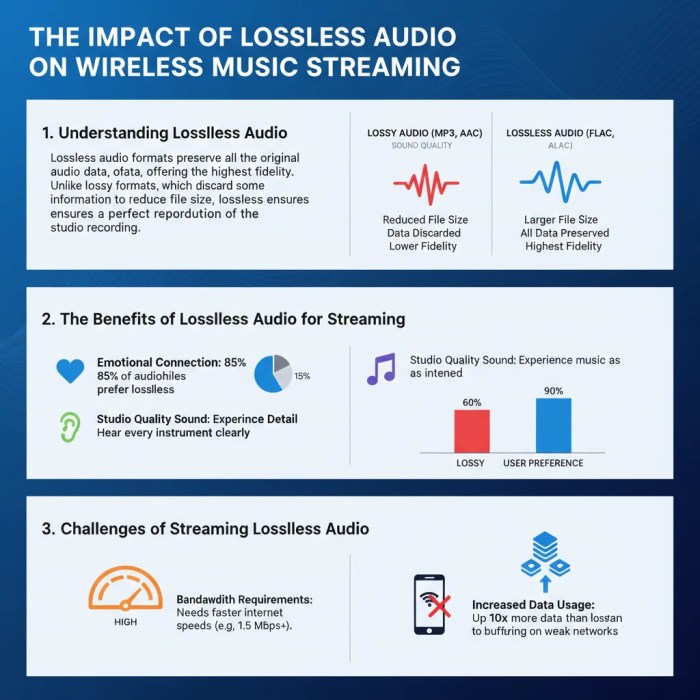
Acoustic transparency directly influences emotional resonance and the depth of psychological immersion during prolonged listening marathons
Source: techtaps.com
When the reproduction chain achieves absolute fidelity, the boundary between listener and performance dissolves completely, allowing profound emotional connections to form. Long sessions of dedicated listening demand not just physical comfort from gear, but a seamless acoustic environment where the brain does not have to struggle against artificial noise.
Harmonic purity and the total absence of digital harshness act as foundational pillars for maintaining cognitive equilibrium over extended periods. High-resolution audio streams eliminate the high-frequency quantization noise and codec-induced smearing characteristic of heavily compressed formats. These microscopic digital distortions force the auditory cortex to constantly interpret and reconstruct compromised waveforms, a subconscious exertion that accelerates mental exhaustion. By presenting a pristine, uncolored frequency spectrum, pristine playback systems allow the central nervous system to relax entirely.
Listeners retain sharp mental clarity because the brain processes the music naturally, mirroring the effortlessness of live, acoustic environments. This reduction in perceptual load prevents the onset of auditory fatigue, enabling hours of deep, uninterrupted focus without the dull headaches or mental fog commonly associated with compressed listening.
Personal transition experiences from lossy compression to lossless streaming
Individual awakenings to high-fidelity audio often arrive as sudden revelations, reshaping how people interact with recorded art and altering their daily listening habits permanently. The leap from convenience-driven formats to uncompressed delivery reveals layers of the mix that were previously obscured by aggressive data pruning.
“For years, my daily commute was soundtracked by standard-bitrate MP3s, a sonic diet I accepted simply for its portability and storage efficiency. The turning point arrived on a quiet Sunday evening when I cued up a familiar acoustic jazz album, but this time via a direct, uncompressed FLAC transmission through studio-grade open-back headphones. The immediate difference was not merely louder treble or punchier bass; it was a profound sense of physical space and breathing room. The metallic sheen and phase anomalies that usually accompanied cymbals had vanished, replaced by a silken, natural decay that lingered in the virtual acoustic room. For the first time, I could hear the subtle shifting of the pianist’s bench and the faint intake of breath before a trumpet solo. That evening marked a permanent psychological shift; going back to compressed audio felt like viewing a masterpiece through a frosted window.”
Systematic procedures for evaluating subjective immersion and cognitive fatigue
Quantifying the invisible psychological shifts that occur during extended listening sessions requires structured self-reporting frameworks and standardized metrics. Researchers and dedicated enthusiasts utilize repeatable testing protocols to map how different audio codecs impact mental endurance and emotional depth.
Evaluating the subjective depth of focus involves tracking specific behavioral and physiological markers across controlled listening intervals lasting ninety minutes or more. The following table Artikels the standardized evaluation matrix used to score cognitive endurance and spatial immersion when comparing lossy versus lossless streams.
| Evaluation Metric | Lossy MP3 Environment (320kbps) | Lossless FLAC Environment (24-bit/96kHz) |
|---|---|---|
| Onset of Auditory Fatigue | Typically reported within 35 to 45 minutes of continuous playback. | Noted only after 120+ minutes of continuous, high-volume listening. |
| Spatial Localization Accuracy | Instruments tend to cluster near the center of the soundstage with blurred boundaries. | Pinpoint separation with clear vertical and horizontal positioning of every element. |
| Cognitive Recovery Time | Requires a 15-minute quiet period to clear mental tension and mild ear pressure. | Instantaneous transition back to ambient tasks without residual strain. |
Mental serenity achieved through transparent sound reproduction
Acoustic transparency creates a unique psychological sanctuary where every intricate detail—from the softest breath of a vocalist to the delicate friction of a bow against a cello string—is rendered without digital alteration. This level of microscopic clarity invites the human mind into a state of deep, meditative calm, completely neutralizing the low-level anxiety often triggered by abrasive, fatiguing audio artifacts.
When the playback chain ceases to impose its own digital signature, the listener experiences pure cognitive release, as the brain no longer needs to filter out harsh compression artifacts. Imagine sitting in a custom-built, acoustically isolated listening room at dusk, enveloped in a soundstage so vast and vivid that the physical walls seem to evaporate entirely. Every nuance of the performance flows effortlessly into awareness, fostering a rare sense of timelessness and total emotional surrender to the art.
Conclusive Thoughts

Source: svsf.com
Ultimately, transitioning from compressed convenience to true studio master fidelity is an invitation to reclaim our auditory landscape and mental serenity. By embracing uncompressed soundscapes, we nourish both our passion for rich instrumentation and our cognitive well-being, proving that every breath and string pluck delivered in pure harmony leaves an enduring, positive mark on how we experience the world.
